
Hai molti errori 404 sul tuo sito WordPress e non sei sicuro di come risolverli?
Ecco il punto: i link interrotti e le pagine mancanti ti costano traffico, posizionamenti e vendite ogni giorno in cui non vengono risolti. Ma la buona notizia è che WordPress (e l'uso di AIOSEO) li rende facili da trovare e correggere.
In questa guida, ti mostreremo esattamente come trovare e correggere gli errori 404 in WordPress utilizzando due degli strumenti più potenti di AIOSEO: Broken Link Checker e Redirection Manager.
Iniziamo con una definizione.
Cosa ti servirà: Broken Link Checker di AIOSEO e Redirection Manager di AIOSEO
In questo articolo
Cos'è un Errore 404?
Un errore 404 è un codice di stato HTTP standard che indica che la pagina o il file che un visitatore sta cercando di raggiungere non può essere trovato sul server.
Viene visualizzato nel browser come un errore 404 Pagina non trovata e appare quando qualcuno fa clic su un hyperlink o digita un URL che non porta più da nessuna parte.
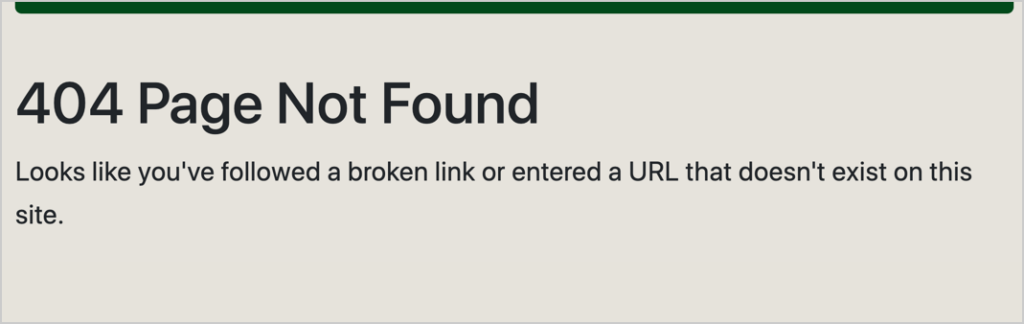
Il codice di errore 404 è uno dei tanti codici di stato HTTP. Puoi vedere l'elenco completo su MDN Web Docs.
Quali sono le cause degli errori 404?
Gli errori 404 si verificano più comunemente quando una pagina o un file è stato eliminato o spostato senza un reindirizzamento attivo. Poiché l'URL originale non punta più a nulla, chiunque tenti di visitarlo visualizza un errore 404. Chiamiamo questi link interrotti o link morti.
Errori di battitura negli URL sono un'altra causa comune. Un singolo carattere errato in un link è sufficiente per attivare un 404.
URL e Indirizzi
Ogni pagina web e file online ha un indirizzo univoco chiamato URL. Indica al browser e al server web esattamente dove trovare la pagina in modo che possa essere visualizzata.
Ad esempio, questo URL indica al server di andare su aioseo.com e caricare la pagina del blog:
https://aioseo.com/blog/Quando sposti una pagina a un nuovo URL, il vecchio indirizzo smette di funzionare, proprio come trasferirsi in una nuova casa senza impostare l'inoltro della posta. Chiunque tenti di visitare il vecchio URL visualizza un errore 404.
La soluzione è un reindirizzamento. Un reindirizzamento inoltra automaticamente i visitatori dall'URL vecchio a quello nuovo, in modo che nessuno veda mai un errore 404. I reindirizzamenti preservano anche il valore SEO della pagina originale, trasferendo la sua autorità al nuovo URL. Vedremo esattamente come impostarli di seguito.
3 Tipi di link non funzionanti
Ci sono 3 tipi di link interrotti che potresti incontrare e dover gestire sul tuo sito.
Link Interni Interrotti
I link interni collegano le pagine all'interno del tuo sito web. Sono importanti per la SEO e per guidare i visitatori attraverso i tuoi contenuti e verso i tuoi prodotti o servizi.
I link interni interrotti frustrano gli utenti e possono impedire loro di raggiungere pagine di checkout, moduli di iscrizione o risorse chiave. Un alto volume di link interni interrotti può anche influire negativamente sui tuoi posizionamenti nei motori di ricerca.
Link Esterni Interrotti
I link esterni puntano a pagine su altri siti web dal tuo sito. Se il sito a cui hai collegato sposta o elimina quella pagina, il tuo link esterno si interrompe. I visitatori che lo cliccano vedranno un errore 404 sull'altro sito.
Suggerimento pro: I siti di notizie cambiano frequentemente gli URL dei loro articoli. Se crei regolarmente link ad articoli di notizie, controlla periodicamente il tuo sito per verificare la presenza di link esterni interrotti.
Backlink Interrotti
I backlink sono link da altri siti web che puntano al tuo. Sono una preziosa fonte di traffico e i link da siti ad alta autorità possono generare un flusso costante di nuovi visitatori sul tuo sito.
Se un altro sito linka al tuo contenuto ma include un errore di battitura nell'URL, quei visitatori incontreranno un errore 404 quando atterreranno sul tuo sito. La buona notizia è che puoi correggerli con un reindirizzamento da parte tua, anche senza toccare il codice dell'altro sito.
Ora vediamo come trovare e correggere i link interrotti in WordPress.
Come trovare e correggere i link non funzionanti sul tuo sito web
Passaggio 1: Installa Broken Link Checker di AIOSEO
Il primo passo è installare il plugin Broken Link Checker di AIOSEO.

Puoi installarlo direttamente dal repository dei plugin di WordPress.
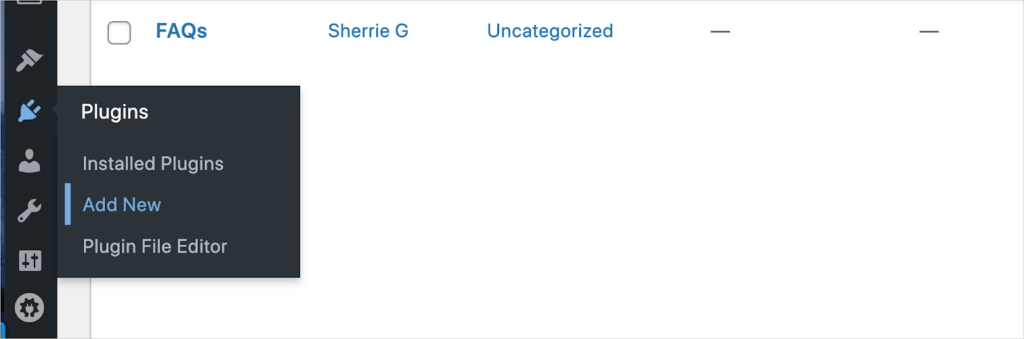
Vai su Plugin » Aggiungi Nuovo, cerca "Broken Link Checker AIOSEO" e fai clic su Installa Ora, quindi su Attiva.
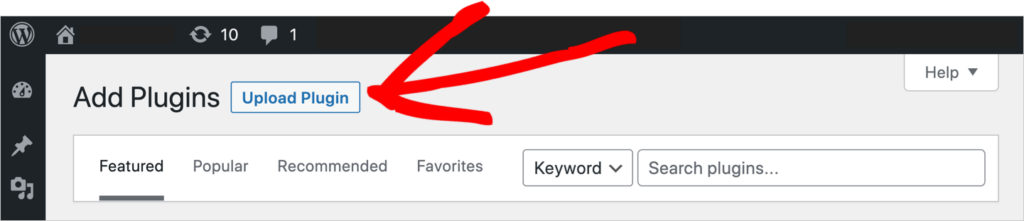
Se hai scaricato il plugin come file zip, vai su Plugin » Aggiungi Nuovo e fai clic su Carica Plugin.
Seleziona il tuo file ZIP, quindi fai clic su Installa Ora.
Se non hai ancora un account, ti verrà richiesto di crearne uno. Una procedura guidata di configurazione ti accompagnerà quindi nei passaggi rimanenti.
Passaggio 2: Rivedi i Link Interrotti
Una volta installato il plugin e completata la scansione iniziale, fai clic sulla scheda Link Interrotti per visualizzare i tuoi risultati.
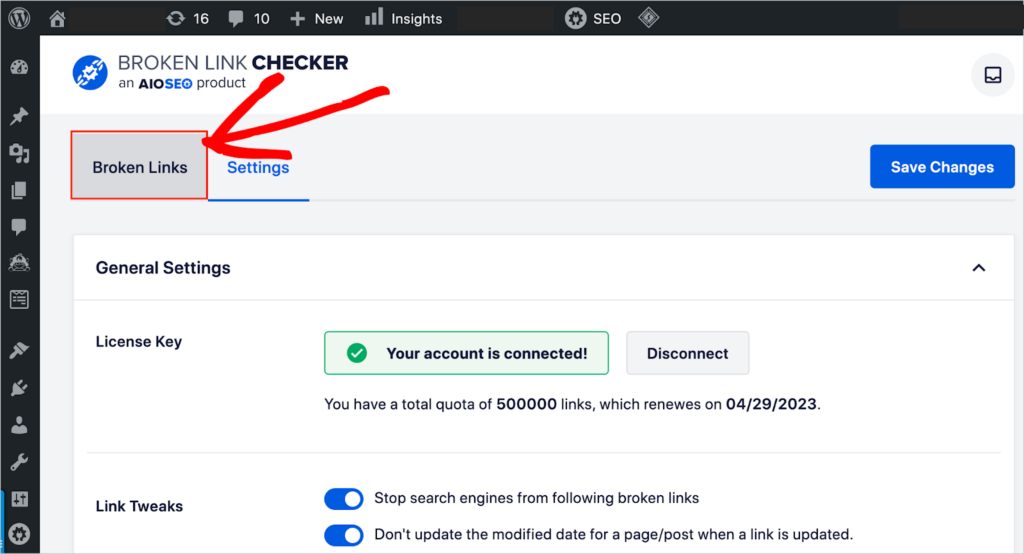
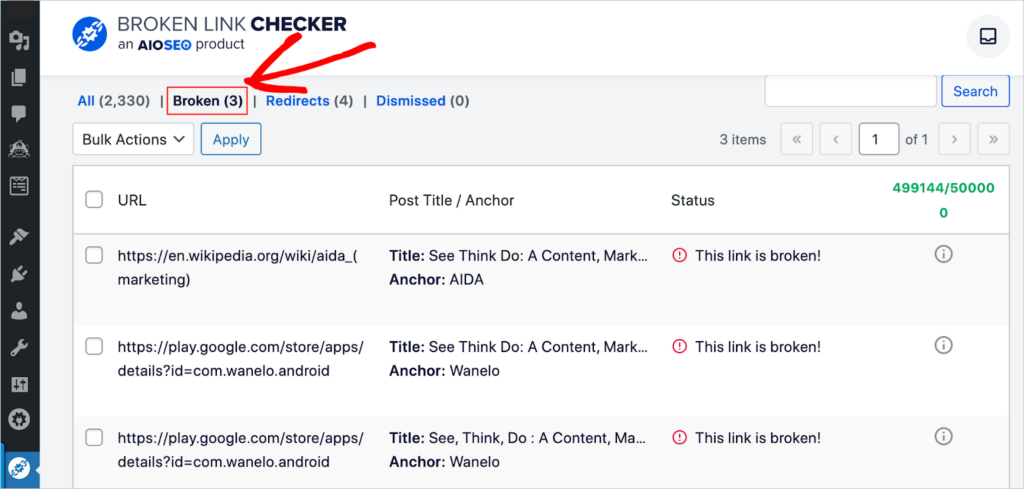
I tuoi link sono organizzati in 4 categorie:
All (all links) | Broken | Redirects | DismissedFai clic su Interrotti per filtrare il tuo elenco solo sui link che necessitano di attenzione.
Passaggio 3: Correggi i Link Interrotti
Passa il cursore del mouse sopra qualsiasi link interrotto per rivelare le opzioni di correzione. Seleziona Modifica URL per aggiornare direttamente il link.
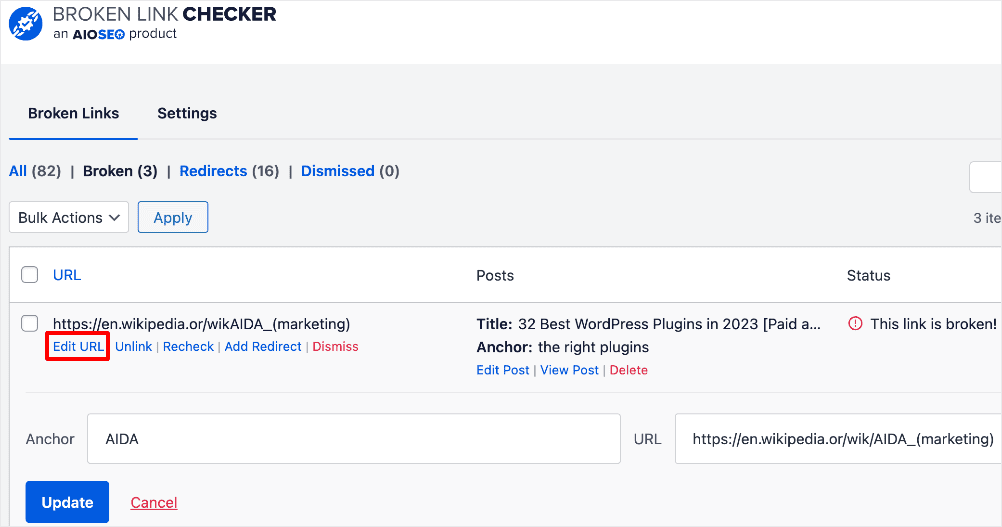
Apparirà un campo che mostra il testo di ancoraggio a sinistra e l'URL interrotto a destra. Digita l'URL corretto e fai clic sul pulsante blu Aggiorna per salvare la modifica.
L'Opzione Rimuovi Link
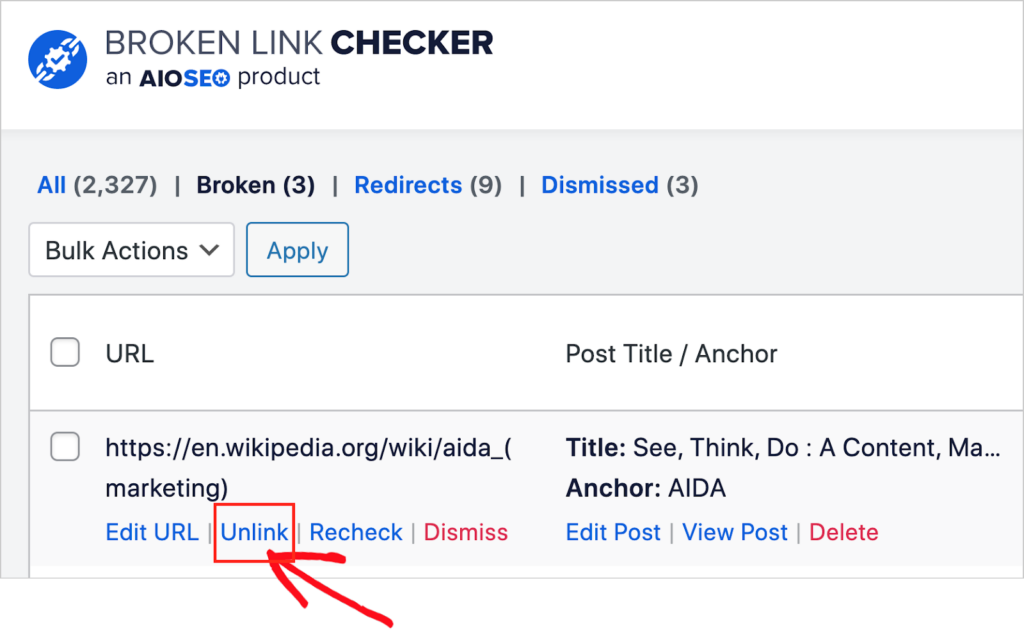
Se la pagina a cui puntava un link interrotto non esiste più e non c'è una sostituzione adatta, scegli invece Rimuovi link. Questo rimuove l'ipertesto dal post lasciando intatto il testo di ancoraggio.
Come correggere i link interrotti con Redirection Manager
Per i link interrotti causati da pagine che sono state spostate in un nuovo URL, la soluzione migliore è un reindirizzamento. Fai clic su Aggiungi reindirizzamento su qualsiasi link interrotto per aprire direttamente il Redirection Manager di AIOSEO.
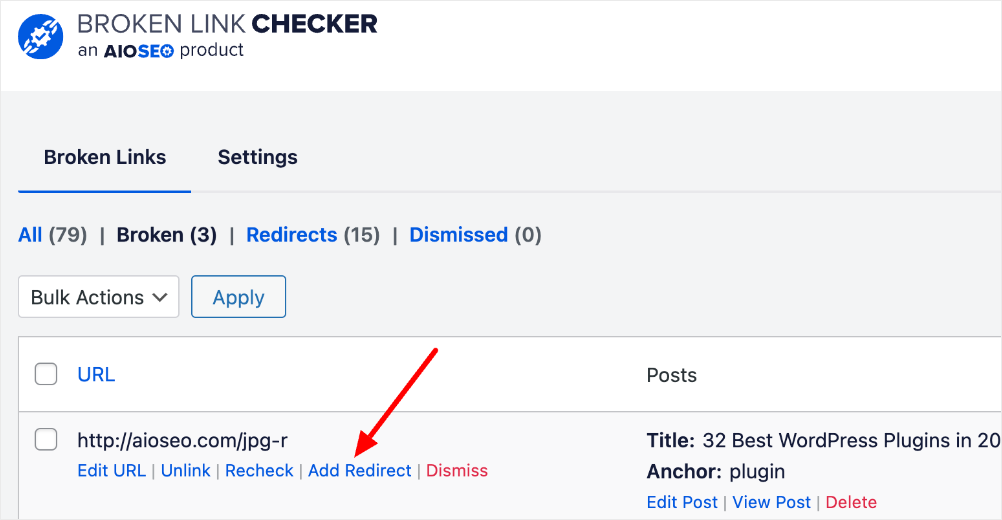
Il Redirection Manager precompilerà l'URL interrotto come origine. Devi solo inserire l'URL di destinazione e scegliere il tipo di reindirizzamento. Ecco cosa significa ogni opzione:
- 301 (Reindirizzamento Permanente): Usalo quando una pagina è stata spostata permanentemente in un nuovo URL. Un 301 trasferisce l'autorità SEO della pagina originale al nuovo URL, rendendolo la scelta giusta per la stragrande maggioranza dei reindirizzamenti.
- 302 (Reindirizzamento Temporaneo): Usalo quando una pagina non è temporaneamente disponibile e tornerà al suo URL originale. Un 302 non trasferisce l'autorità SEO, quindi usalo solo quando lo spostamento è veramente a breve termine.
- 307 (Reindirizzamento Temporaneo): Simile a un 302, ma preserva esplicitamente il metodo di richiesta HTTP. La maggior parte degli utenti non ne avrà bisogno a meno che non stiano lavorando con richieste POST o configurazioni del server specifiche.
Nella quasi totalità dei casi di link interrotti, un reindirizzamento 301 è la scelta corretta.
Una volta salvato un reindirizzamento, puoi monitorarlo nella vista dashboard del Gestore Reindirizzamenti, che mostra quante volte ogni reindirizzamento è stato attivato e il suo tipo. Questo rende facile confermare che i tuoi reindirizzamenti funzionano e individuare quelli che non lo fanno.
Puoi anche accedere al Gestore Reindirizzamenti direttamente in qualsiasi momento andando su All in One SEO » Reindirizzamenti nella tua dashboard di WordPress, senza passare prima da Broken Link Checker. Questo è utile per impostare reindirizzamenti in modo proattivo, gestire quelli esistenti in blocco o importare reindirizzamenti tramite CSV quando migri da un altro plugin o piattaforma.
Come Utilizzare le Impostazioni Avanzate di Broken Link Checker
Broken Link Checker riesamina il tuo sito ogni 3 giorni. Puoi personalizzare quali tipi di contenuto sono inclusi in queste scansioni modificando le Impostazioni Avanzate.
Vai su Broken Link Checker » Impostazioni e scorri verso il basso per fare clic sull'interruttore Impostazioni Avanzate.
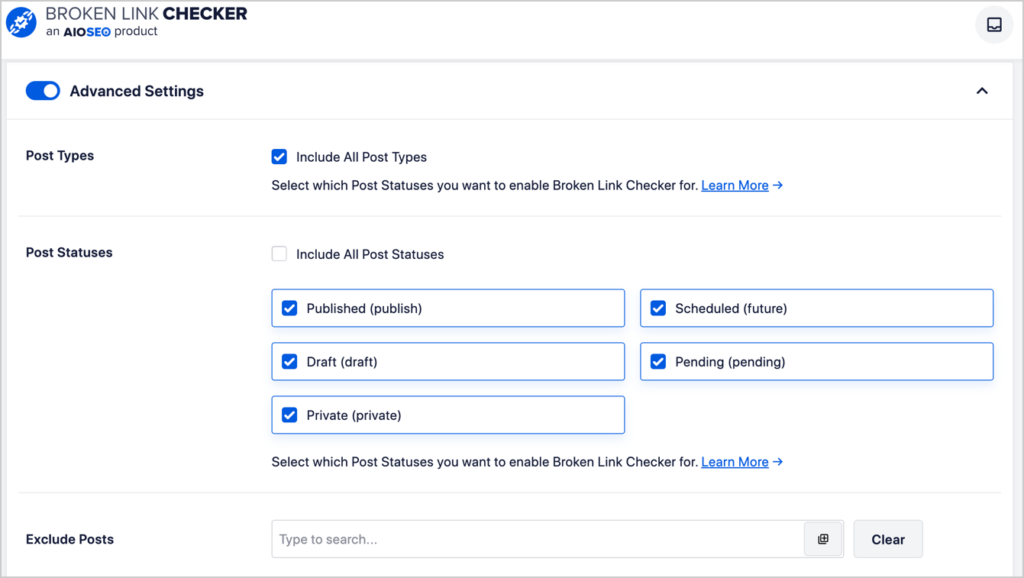
L'impostazione predefinita è Includi Tutti i Tipi di Post. Deseleziona qualsiasi tipo di post che desideri escludere dalla scansione. Le opzioni disponibili sono:
- Pubblicato
- Bozza
- Privato
- Pianificato (futuro)
- In attesa
Come AIOSEO previene automaticamente gli errori 404
Finora, abbiamo trattato come trovare e correggere i link non funzionanti dopo che si verificano. Ma il Gestore Reindirizzamenti di AIOSEO ti aiuta anche a prevenire gli errori 404 prima che si verifichino.
Quando elimini o sposti una pagina in WordPress, AIOSEO rileva la modifica e ti chiede automaticamente di creare un reindirizzamento prima che il vecchio URL diventi inattivo. Non devi ricordarti di impostare manualmente un reindirizzamento. AIOSEO lo rileva in tempo reale e ti dà la possibilità di gestirlo subito, senza lasciare la tua bacheca di WordPress.
Questo è particolarmente prezioso per i siti che pubblicano frequentemente o ristrutturano regolarmente i contenuti. Ogni volta che un URL cambia senza un reindirizzamento, rischi di perdere il traffico e l'autorità di link che quella pagina aveva accumulato. La protezione automatica dei contenuti preserva il valore SEO.
Per modifiche su larga scala, come una migrazione completa del sito o uno spostamento di dominio, il Gestore Reindirizzamenti supporta anche l'importazione di reindirizzamenti in blocco tramite CSV e regole di reindirizzamento per l'intero sito, in modo da poter gestire migliaia di modifiche URL contemporaneamente senza impostare ogni reindirizzamento individualmente.
Come correggere i backlink interrotti (link in entrata da altri siti web)
I backlink non funzionanti sono un problema leggermente diverso. Sono link da altri siti web che puntano a un URL sul tuo sito che non funziona più, di solito a causa di un errore di battitura nel link dell'altro sito o di un URL che è cambiato dalla tua parte.
Puoi individuarli controllando i tuoi report di traffico in Google Analytics o nel plugin MonsterInsights. Se noti traffico che arriva a un URL che non esiste sul tuo sito, si tratta quasi sempre di un backlink non funzionante.
Ci sono 2 modi per risolverlo:
- Contatta il sito di riferimento e chiedi loro di correggere l'URL nel loro link. Questa è la soluzione più pulita a lungo termine, ma richiede un'azione da parte di qualcun altro.
- Crea un reindirizzamento sul tuo sito dall'URL non funzionante alla pagina corretta. Questo è più veloce e completamente sotto il tuo controllo. Usa il Gestore Reindirizzamenti di AIOSEO per impostarlo in pochi secondi senza aspettare una terza parte.
Nella maggior parte dei casi, impostare il reindirizzamento da soli è la soluzione più veloce e affidabile. Assicura inoltre di catturare quel traffico immediatamente anziché aspettare che un altro proprietario di sito apporti modifiche.
E adesso?
Spero che questa guida abbia chiarito come trovare e correggere gli errori 404 in WordPress. Tra la scansione automatizzata di Broken Link Checker e il Gestore Reindirizzamenti di AIOSEO, hai tutto ciò che ti serve per mantenere il tuo sito pulito, proteggere la tua SEO e assicurarti che nessun visitatore si imbatta in un vicolo cieco.
Per saperne di più su come mantenere sana la struttura dei link del tuo sito, consulta la nostra guida completa al collegamento interno per la SEO.
Pronto a smettere di perdere traffico a causa di link interrotti? Ottieni AIOSEO oggi stesso e lascia che la funzione Gestore di Reindirizzamenti se ne occupi per te, automaticamente.
Divulgazione: I nostri contenuti sono supportati dai lettori. Ciò significa che se fai clic su alcuni dei nostri link, potremmo guadagnare una commissione. Raccomandiamo solo prodotti che crediamo aggiungeranno valore ai nostri lettori.
Vuoi Provare AIOSEO Gratuitamente?
Inserisci l'URL del tuo sito web WordPress per installare AIOSEO Lite.



Grazie per l'assistenza,
Questa funzionalità cruciale è disponibile solo nella versione a pagamento di All in one SEO
Scusa per il mio errore di battitura:
Dovrebbe essere:
Gli hacker inseriscono spesso indirizzi URL errati. Qual è lo scopo?
Ciao Andrzej,
Intendi lo spoofing dell'IP?
Se è così, di solito viene fatto per sovraccaricare i server allo scopo di rallentarli o farli crashare.
C'è qualche opzione in AIOSEO per reindirizzamenti di massa dove possiamo caricare un numero di URL da un foglio Excel che includa anche gli URL di destinazione?