
Souhaitez-vous savoir si votre article cible réellement les termes pour lesquels vous souhaitez vous classer ?
All in One SEO évalue votre contenu par rapport aux mots-clés que vous avez définis et vous indique ce qu'il faut changer pour chacun d'eux.
Dans ce guide, nous vous expliquerons comment ajouter des mots-clés, lire les suggestions pour chacun d'eux, choisir votre mot-clé principal et enregistrer vos modifications.
Avant de commencer, assurez-vous que All in One SEO est installé et activé sur votre site WordPress.
Dans cet article
Ajouter un mot-clé
Pour commencer, ouvrez l'article sur lequel vous souhaitez travailler dans l'éditeur WordPress. Ensuite, faites défiler sous votre contenu jusqu'à la section Paramètres AIOSEO.
IMPORTANT :
La fonctionnalité TruSEO Highlighter ne fonctionne qu'avec l'éditeur de blocs WordPress (également connu sous le nom de Gutenberg) et l'éditeur classique de WordPress.
La prise en charge des constructeurs de pages sera ajoutée dans les futures versions.
À partir d'ici, sélectionnez l'onglet Optimisation. Ensuite, sélectionnez l'onglet Mots-clés dans le panneau Optimisation du contenu.
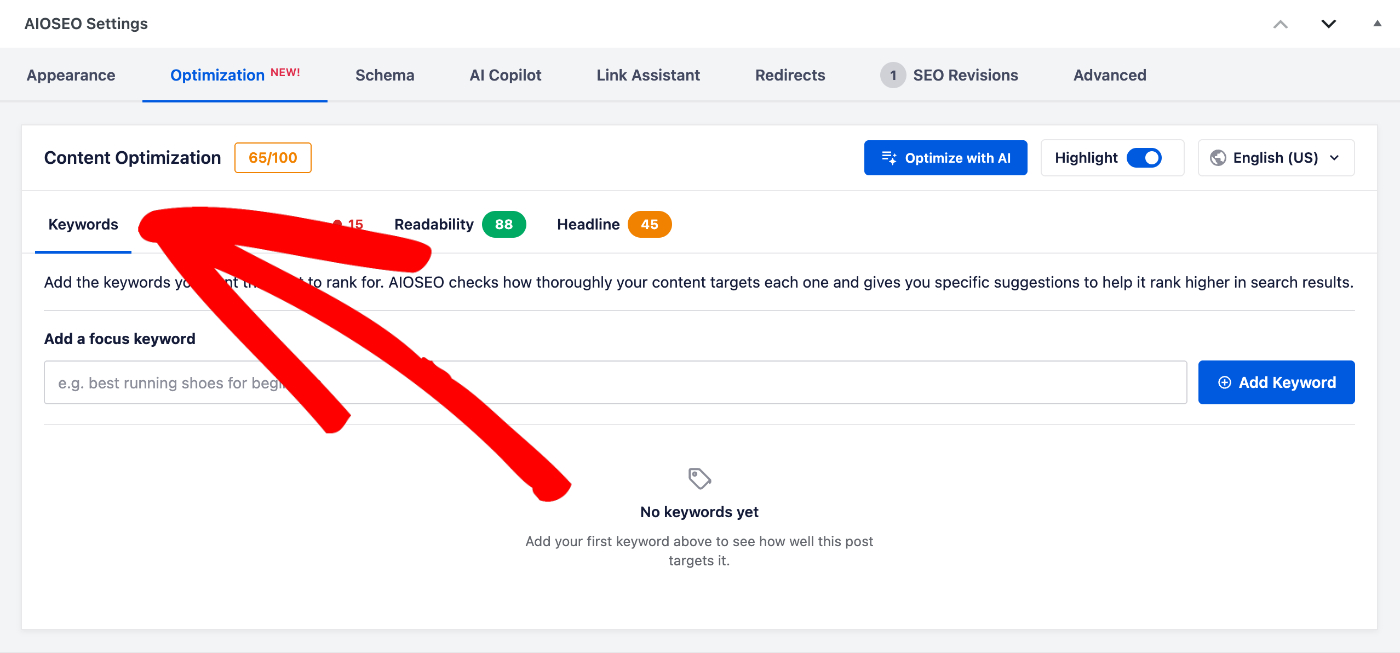
Sur un article sans mots-clés, le champ au-dessus du tableau indique Ajouter un mot-clé principal. C'est parce que le premier mot-clé que vous ajoutez devient votre mot-clé principal. Une fois que l'article a un mot-clé principal, l'étiquette change en Ajouter un mot-clé supplémentaire.
Ensuite, tapez le terme pour lequel vous souhaitez que l'article se classe dans le champ Ajouter un mot-clé principal. Cliquez ensuite sur le bouton Ajouter un mot-clé.
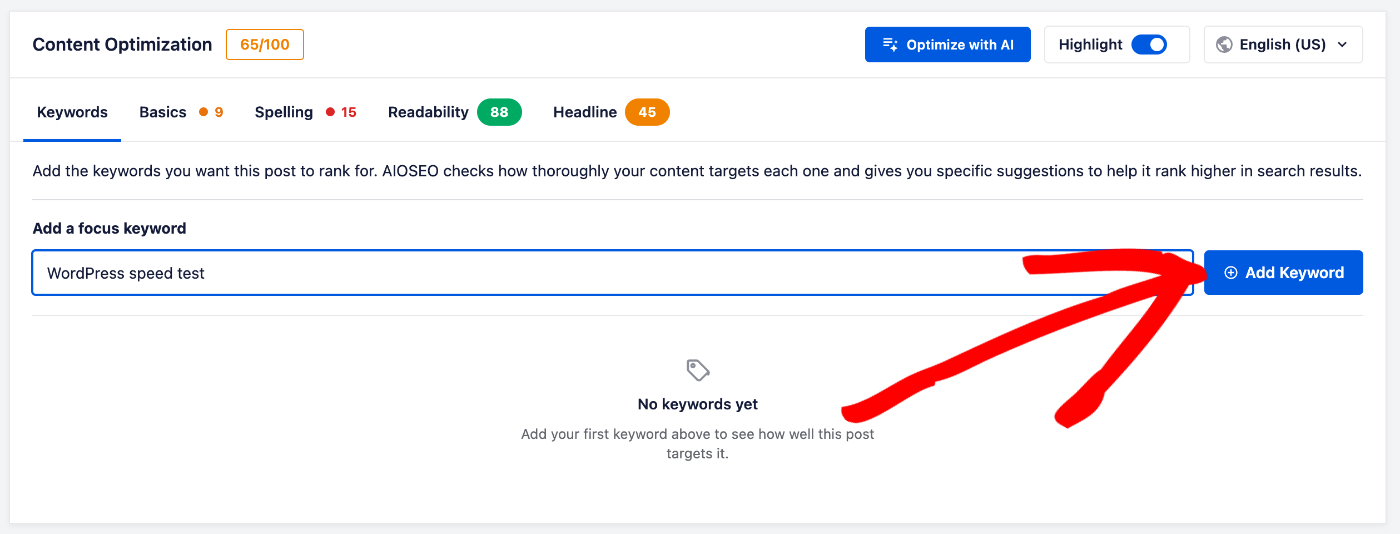
Votre mot-clé rejoint le tableau en dessous, avec son propre Score sur 100 et un compte du nombre d'Améliorations qu'il contient.
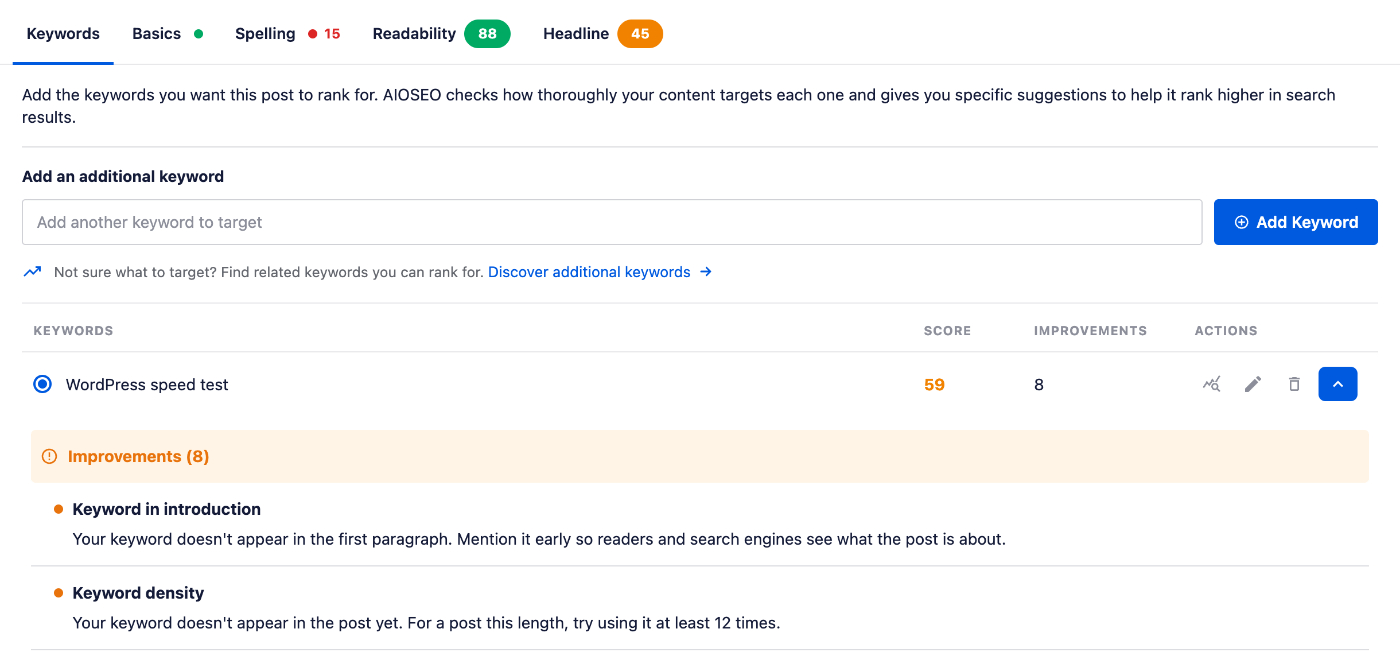
Chaque mot-clé est noté séparément. Cela vous montre en un coup d'œil quels termes votre contenu couvre déjà bien et lesquels nécessitent un travail.
NOTE :
Les mots-clés multiples sont une fonctionnalité Pro. Cliquez ici pour passer à AIOSEO Pro »
IMPORTANT :
Un maximum de dix mots-clés. Ceci afin d'éviter des problèmes de performance avec l'écran Modifier l'article.
Lire les suggestions
Lorsque vous ajoutez un mot-clé, ses suggestions s'ouvrent automatiquement sous la ligne. Elles sont triées en deux groupes, de la même manière que les autres domaines d'analyse fonctionnent.
Le groupe Améliorations liste les vérifications qui méritent votre attention. Le groupe Bon collecte celles que votre contenu réussit déjà.
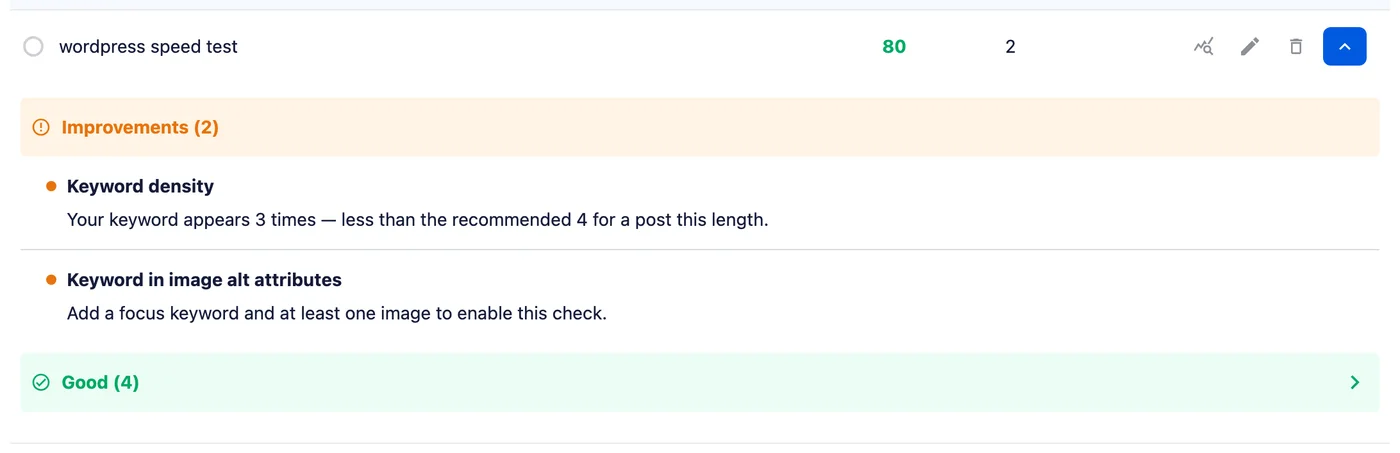
Chaque élément nomme la vérification et vous dit quoi faire à ce sujet. Une suggestion de densité de mots-clés, par exemple, vous indique combien de fois votre mot-clé apparaît actuellement et le nombre recommandé pour un article de cette longueur.
Une poignée de vérifications, y compris celle de votre mot-clé dans les attributs alt des images, ne s'exécutent que sur votre mot-clé principal.
NOTE :
Ce ne sont que des recommandations, elles sont basées sur nos meilleures pratiques. Vous n'êtes pas obligé de les suivre rigoureusement si cela affecte la qualité de votre contenu.
La qualité de votre contenu est le principal facteur de classement pour tous les moteurs de recherche et vous ne devriez pas modifier votre contenu si vous estimez qu'il ne profitera pas à votre public. Vous connaissez votre public mieux que quiconque.
Choisir votre mot-clé principal
Un mot-clé dans le tableau est votre mot-clé principal. C'est le terme principal pour lequel vous souhaitez que l'article se classe. Le cercle plein au début de sa ligne le marque.
Pour sélectionner un autre mot-clé, cliquez sur le cercle au début de sa ligne.
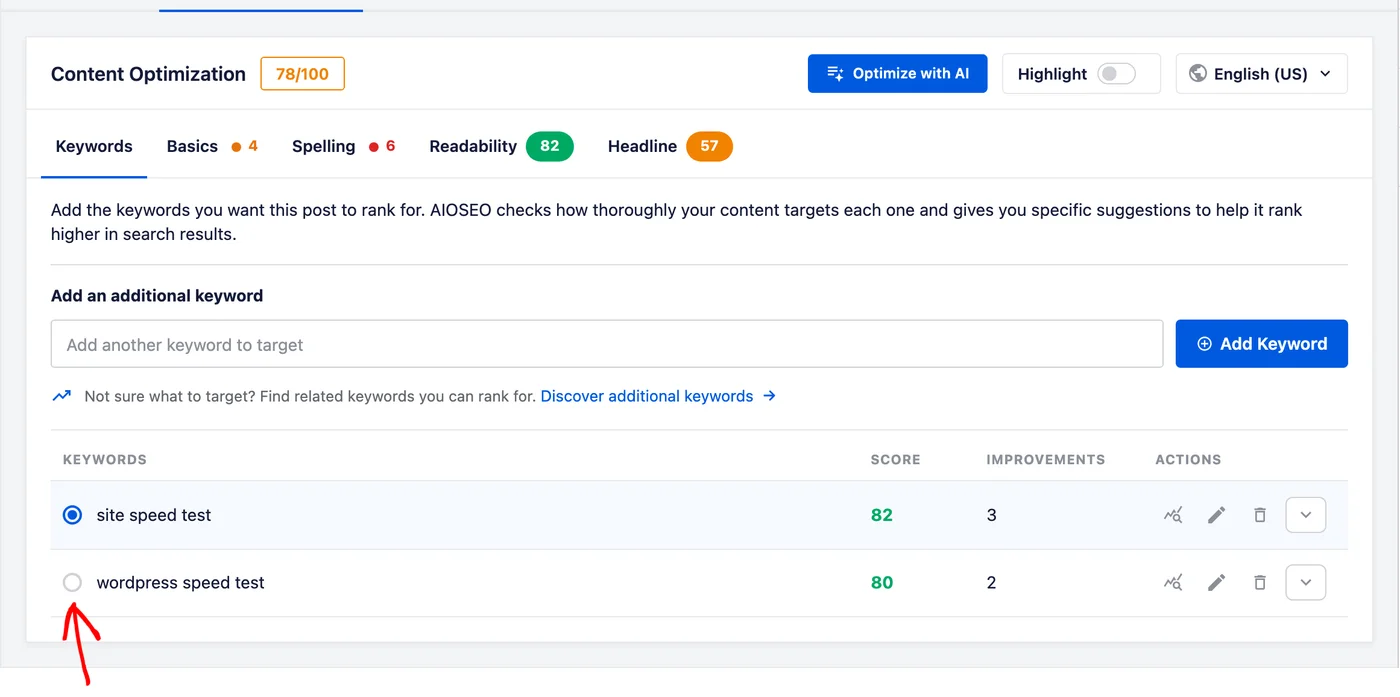
Choisir un mot-clé principal est important car quelques vérifications ne s'appliquent qu'à lui. Ces vérifications vous le disent directement, plutôt que de vous laisser vous demander pourquoi elles ne s'exécutent pas.
Gérer vos mots-clés
Chaque ligne a son propre ensemble de contrôles sous Actions.
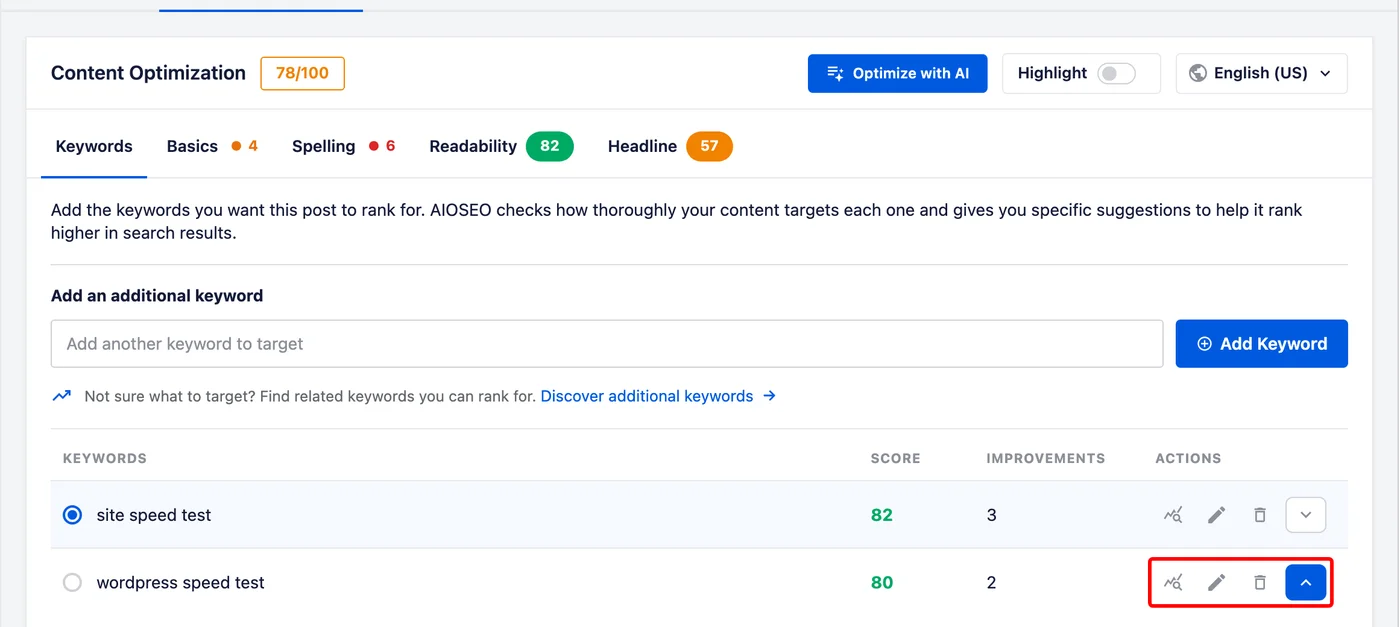
Les actions que vous pouvez effectuer sur un mot-clé sont :
- Ouvrir le suivi des performances du mot-clé : ouvre le suivi de classement, qui représente la position du mot-clé dans les résultats de recherche au fil du temps.
- Modifier le mot-clé : changez le mot-clé sans perdre la ligne.
- Supprimer le mot-clé : supprimez le mot-clé des Paramètres AIOSEO pour cet article.
Le bouton à la fin de la ligne développe et réduit les suggestions de ce mot-clé.
Le suivi de classement fait partie des Statistiques de recherche, qui est disponible pour les clients ayant le niveau de licence Elite d'All in One SEO Pro. Les Statistiques de recherche tirent leurs données de votre compte Google Search Console. Notre guide sur l'utilisation du suivi de classement des mots-clés couvre ce qu'il rapporte et comment l'utiliser.
Si vous supprimez votre mot-clé principal alors que d'autres mots-clés restent, le premier mot-clé restant dans le tableau devient votre nouveau mot-clé principal.
Enregistrer vos mots-clés
Les mots-clés sont stockés avec l'article lui-même. Lorsque vous avez terminé de les ajouter, cliquez sur le bouton Enregistrer ou Mettre à jour en haut de l'éditeur d'article.
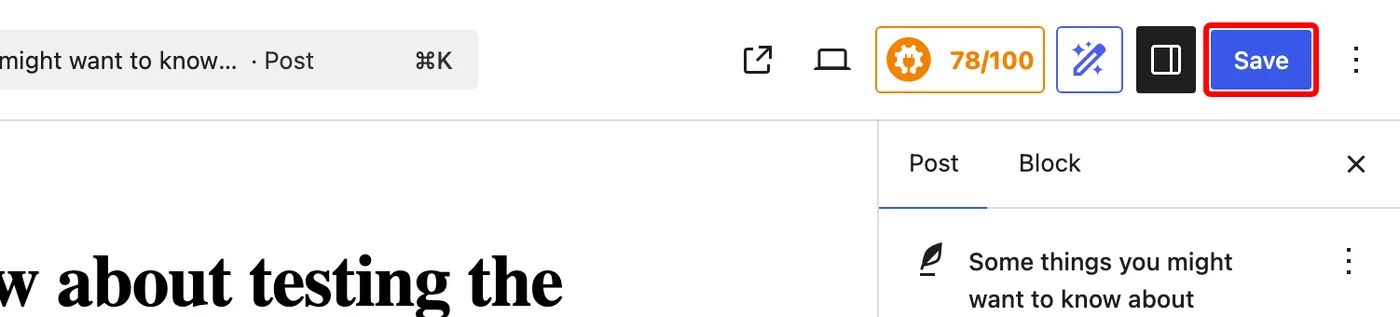
Le nombre à côté est le score global de votre article. Ce score couvre l'ensemble de l'article plutôt qu'un seul mot-clé.
Cet enregistrement conserve vos mots-clés ainsi que le reste de vos modifications apportées à l'article. Une fois l'article enregistré, vos mots-clés et leurs scores vous attendent la prochaine fois que vous l'ouvrirez.
C'est tout ! Vos mots-clés sont enregistrés, et chacun a maintenant son propre score et ses propres suggestions à examiner.
Lecture complémentaire / Prochaines étapes
Vous ne savez pas quels termes cibler ? Le lien Découvrir des mots-clés supplémentaires au-dessus du tableau trouve des mots-clés apparentés pour lesquels vous pouvez vous classer. Notre guide sur l'obtention de suggestions de mots-clés de Semrush le couvre.
Les mots-clés sont l'un des cinq domaines qu'All in One SEO vérifie. Pour voir ce que couvrent les autres, lisez ce qu'est TruSEO, ou parcourez toute notre documentation sur l'analyse de contenu TruSEO.
Questions fréquemment posées
Ci-dessous, nous avons répondu à certaines des questions les plus courantes sur les mots-clés :
Combien de mots-clés puis-je ajouter ?
Un seul article peut contenir jusqu'à 10 mots-clés supplémentaires en plus de son mot-clé principal. Nous ne recommandons pas d'en ajouter trop, car le contenu de votre article doit se concentrer sur quelques mots-clés seulement. Un contenu général sur une gamme de mots-clés ne fonctionne pas aussi bien dans les résultats de recherche.
Voir Ajouter un mot-clé ci-dessus.
Quelle est la différence entre le mot-clé principal et les autres ?
Le mot-clé principal est le terme principal pour lequel vous souhaitez que l'article se classe. Chaque mot-clé obtient son propre score et ses propres suggestions. Cependant, quelques vérifications ne s'appliquent qu'au mot-clé principal.
Voir Choisir votre mot-clé principal ci-dessus.
Pourquoi mon mot-clé a-t-il disparu ?
Le message a très probablement été fermé avant d'être enregistré. Les mots-clés sont stockés avec le message, ils doivent donc être enregistrés pour être conservés. L'ajout du mot-clé à nouveau et l'enregistrement du message le remettent en place.
Voir Enregistrer vos mots-clés ci-dessus.
Dois-je viser un score parfait pour chaque mot-clé ?
Non. Traitez les scores comme un guide pour savoir où votre contenu est faible sur un terme. Travaillez sur le groupe Améliorations et arrêtez-vous lorsque les suggestions restantes nuiraient à la qualité de votre écriture.
Un bon score garantit-il un classement élevé ?
Non, un bon score ne peut pas garantir que votre message se classera dans les résultats de recherche. Le score n'est qu'un guide pour vous aider à optimiser votre contenu et votre référencement pour ce mot-clé. Google indique que le classement dans les résultats de recherche implique de nombreux facteurs et pas seulement la qualité de votre contenu ou son optimisation pour un mot-clé spécifique.