
The Google June 2026 Spam Update is the latest reminder that Google continues to prioritize helpful, trustworthy content while cracking down on manipulative SEO practices.
Whenever Google releases a spam update, website owners and marketers immediately start checking rankings, traffic, and Search Console reports to see whether they've been affected. And for good reason, because spam updates can have a significant impact on sites that rely on low-quality content, manipulative links, or other tactics that go against Google's spam policies.
So, the Google June 2026 Spam Update appears to reinforce Google's ongoing efforts to reward sites that demonstrate expertise, trustworthiness, and genuine value to users.
In this guide, I'll explain what the Google June 2026 Spam Update is, who is most likely to be affected, and the steps you should take if you've noticed changes in your rankings or traffic.
In This Article
What the Google June 2026 Spam Update Actually Is
Google released the update on June 24, 2026, at around noon ET. The rollout finished 2 days later, on June 26 at 2 pm ET. Google called it a normal spam update that applies to every language and every country.
That word “spam” trips people up. It doesn't mean junk email or comment spam on your blog. For the Google June 2026 spam update, it means tactics built to trick search rankings rather than earn them. Think of it less like an inbox filter and more like a referee catching someone breaking the rules of a game.
If your site is small, honest, and built for real readers, this update almost certainly is not about you. Google's spam updates target specific manipulation tactics, not sites that are simply small, new, or imperfect.
What Counts as Spam to Google
Google groups search spam into a handful of named categories from its full list of search spam policies.
According to reporting on Google's rollout, this specific update did not target link spam or site reputation abuse. If your backlinks look unusual, that's a separate issue for a separate day. This also means that the sites at real risk here share a pattern: they exist mainly to rank, not to serve an actual reader.
Here's what each one means:
Scaled Content Abuse
Publishing a large volume of pages that provide readers little or no real value, often generated with minimal human input. The keyword is “value,” not “volume.” Publishing often is not the problem.
Publishing a lot of thin, repetitive, or templated pages with nothing new to say is If you write 3 posts a week and each one answers a real question with real detail, that's a normal publishing schedule, not scaled content abuse.
Site Reputation Abuse
Sometimes called “parasite SEO,” this happens when a site publishes someone else's content just to borrow their trust and rankings, with no real oversight from the site owner. Think of a well-known news site letting an outside company post coupon pages under its name. We'll cover next why this particular update left this category alone.
Expired Domain Abuse
Buying an old domain name with existing search authority, then filling it with unrelated, low-value content to cash in on that authority. If you bought your domain new and it's always been about your actual business, this doesn't apply to you.
Manipulating AI Search Results
In May 2026, Google added a new rule to its spam policies: trying to manipulate its artificial intelligence (AI) features in Search, including AI Overviews and AI Mode, such as by buying or faking citations. This is the newest category, and it's worth knowing about even if it doesn't apply to your site.
If you want to earn visibility in AI search results the right way, we've covered how to get cited by ChatGPT, Perplexity, and other AI search tools in a separate guide.
How to Check If Your Site Was Affected?
You don't need to guess. Here's how to check, step by step:
Look at your Search Console timeline: Open Google Search Console and go to the Performance report. Set the date range to cover June 24 through June 26, 2026, and a few weeks after.
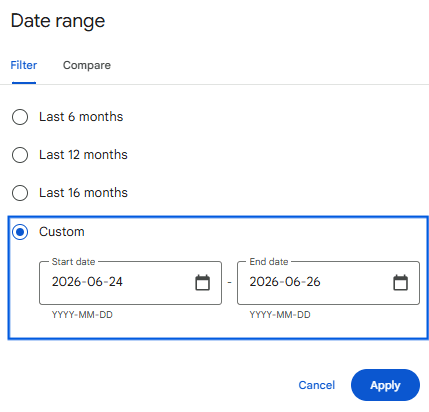
Look for a clear, sudden drop in clicks and impressions that starts right around June 24. A gradual decline over months is a different problem. A sharp drop that aligns with these dates is the signal you're looking for.
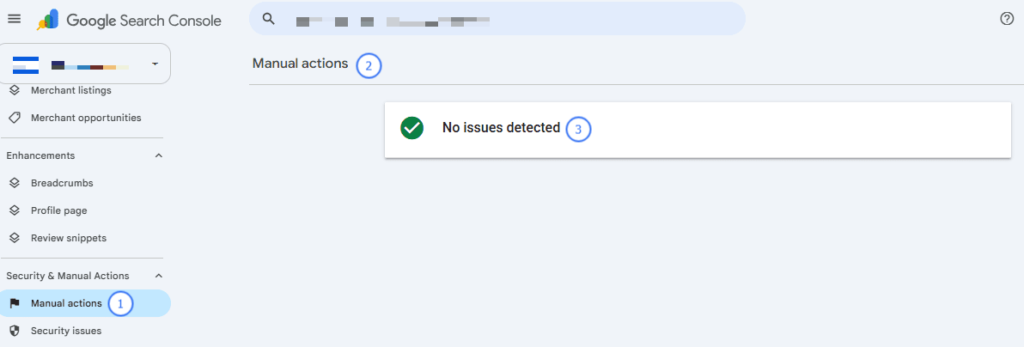
Check for a manual action: In Search Console, click Manual Actions in the left menu. If Google's team flagged your site by hand, you'll see it listed here with an explanation.
Run a full site audit: This is the step that turns “I think something's wrong” into “here's exactly what to fix.” Say your site has 15 city-page variations that all share the same 200 words with just the city name swapped, that's a near-duplicate pattern Google's scaled content abuse policy is built to catch, and it's exactly the kind of pattern AIOSEO's Site Audit flags under content quality, alongside technical issues like missing schema or broken internal links. Instead of guessing which pages are thin, you get a specific list of URLs marked Issue or Warning, so you can fix or rewrite the actual pages instead of your whole site.
4 Steps to Take After the Google June 2026 Spam Update
So, if you've been affected by the Google June 2026 Spam Update, don't panic. The first few days after any core or spam update are often volatile, and rankings can continue shifting for several weeks.
One of the biggest mistakes I see after algorithm updates is changing everything at once. Give Google time to finish rolling out the update before making major decisions. In the meantime, document changes, monitor trends, and focus on long-term improvements rather than quick fixes.
Ultimately, the Google June 2026 Spam Update is another signal that sustainable SEO wins in the long run, and sites built on quality, trust, and genuine value tend to recover faster and perform better over time.
Here's a systematic approach you can take:
1. Monitor Your Traffic and Rankings
Check Google Search Console and Google Analytics to determine:
- Which pages lost traffic
- Which keywords dropped
- Whether the decline is sitewide or limited to certain sections
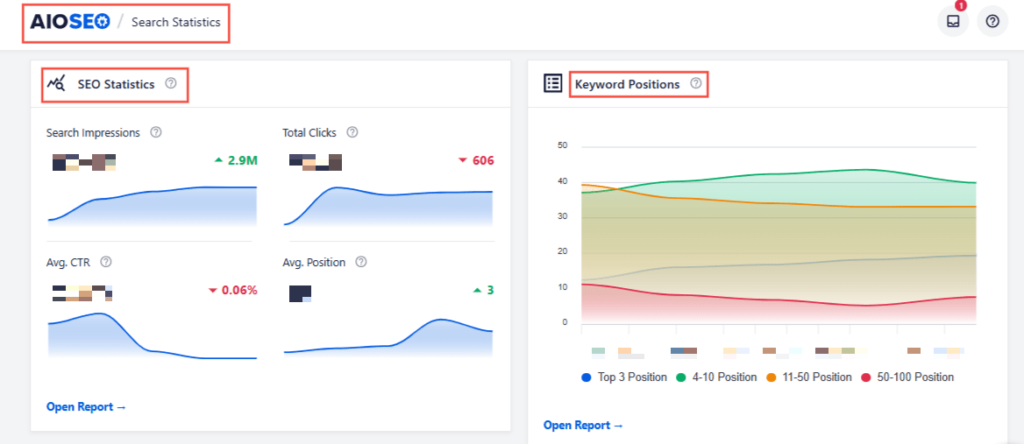
AIOSEO's Search Statistics feature can also make this process easier by surfacing keyword movements and identifying your biggest winners and losers directly inside WordPress.
2. Audit Your Content Quality
Review affected pages and ask yourself:
- Does this content genuinely help users?
- Is it original and well-researched?
- Does it demonstrate real experience and expertise?
- Is it more valuable than competing pages?
Pages created primarily for search engines rather than people are often the most vulnerable during spam updates.
3. Review Your E-E-A-T Signals
Google continues to emphasize:
- Experience
- Expertise
- Authoritativeness
- Trustworthiness
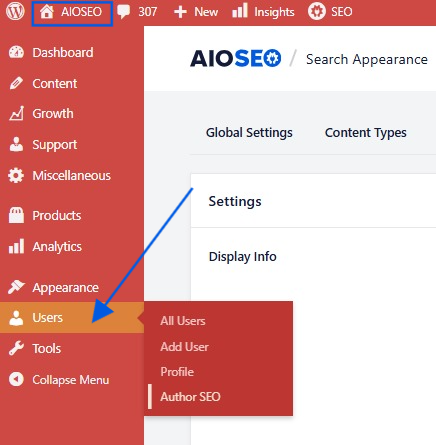
Strengthen author bios, update credentials, add citations, and ensure content is factually accurate and current. AIOSEO's Author SEO feature can help by adding author schema, social profile links, and detailed author information that reinforces trust signals.
4. Run an SEO Audit
Sometimes, traffic drops that coincide with updates are unrelated to the update itself. Review:
- Indexing issues
- Robots directives
- Broken pages
- Manual actions
- Site speed and usability problems
Here's how to check for it using AIOSEO's Site Audit feature:
1. In your WordPress dashboard, in the top bar, look for SEO, then click SEO Analysis.
2. Click the Site Audit tab and look at the Site Overview. It shows how many checks passed and how many returned Warnings or Issues.
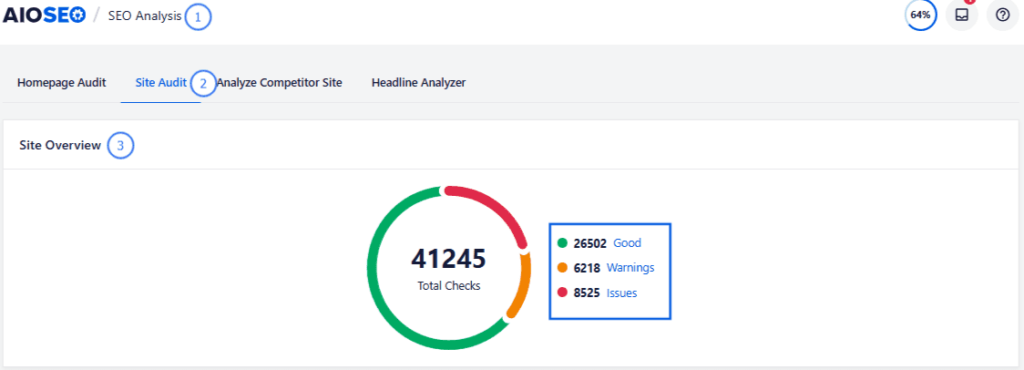
3. Click Issues to filter the report down to just the problems that need attention.
4. Click the arrow next to any flagged page to see the full audit for that page, including the exact issue and a link to fix it.
The report sorts everything into content quality issues (such as thin or duplicate pages) and technical issues (such as missing schema or broken links). Instead of guessing which pages might be a problem, you get a specific list of URLs to fix.
Google June 2026 Spam Update: FAQs
What is the Google spam update?
A Google spam update is an algorithm update designed to identify and reduce the visibility of websites that violate Google's spam policies. These updates target tactics such as automatically generated content, link spam, cloaking, hacked content, and other manipulative practices intended to artificially improve rankings.
Is a Google update needed?
Yes. Google releases updates regularly to improve the quality, relevance, and safety of its search results. The web changes constantly, with new content, technologies, and spam tactics emerging every day. Updates help Google adapt to these changes and ensure users continue receiving accurate, useful information.
Will the Google June 2026 Spam Update affect AI-generated content?
Not necessarily. Google has repeatedly stated that AI-generated content itself is not against its guidelines. However, low-quality, unhelpful, or mass-produced content created solely to manipulate rankings may be negatively impacted. The focus remains on content quality and usefulness, regardless of how the content was created.
The Bottom Line
The June 2026 spam update isn't about punishing small or imperfect sites. It's about tactics built to game the system rather than earn a spot in it. If your traffic dipped, check your Search Console timeline against the June 24 to 26 window, confirm there's no manual action, then run a full site audit to see exactly what needs attention.
Want a clear list of what to fix instead of a guessing game? Run a Site Audit inside AIOSEO to see your site's content quality and technical health in one place, then follow us for more breakdowns like this one as the story develops.
Disclosure: Our content is reader-supported. This means if you click on some of our links, then we may earn a commission. We only recommend products that we believe will add value to our readers.
Want to Try AIOSEO for Free?
Enter the URL of your WordPress website to install AIOSEO Lite.