
Google’s AI Search Overhaul marks one of the biggest changes to search in years, fundamentally changing how people discover information and how websites earn organic traffic.
With Google expanding AI Mode to more users, we’re seeing more AI-generated responses, conversational follow-up questions, and personalized search experiences. Instead of simply directing users to websites, Google is increasingly answering questions directly while surfacing supporting sources throughout the experience.
If you’re a website owner, marketer, or publisher, it’s natural to wonder what this means for your traffic.
While some websites may see fewer clicks for informational queries, others benefit from increased visibility when their content is selected as a source for AI-generated answers.
So, in this article, I’ll explain what changed with Google’s AI Search Overhaul, what search results look like now, how it affects website owners, and what you can do to adapt your SEO strategy moving forward.
In This Article
What Changed at I/O 2026?
If your search traffic has felt shakier the past few months, you’re not imagining it. At Google I/O 2026 in May, Google made AI Mode the default search experience for over a billion monthly users. The search box changed for the first time in 25 years. And the data on what that’s doing to clicks is now in.
Google announced several updates together on May 19, but two matter most if you run a website:
- AI Mode is now the default experience, powered by a new Gemini model built for search. It’s no longer a separate mode people switch into, and it’s baked into how Search works out of the box.
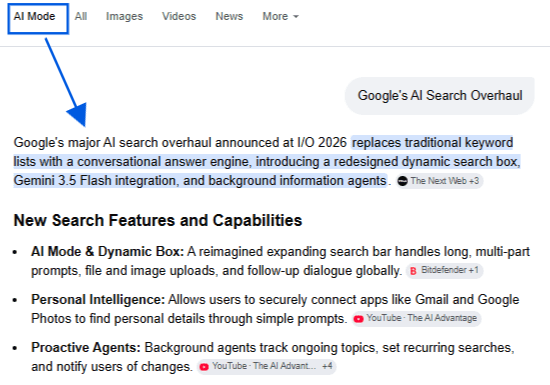
- The search box itself changed: You can now search with text, images, files, video, or an open Chrome tab, all in one box. That’s a real shift in what a “query” even is.
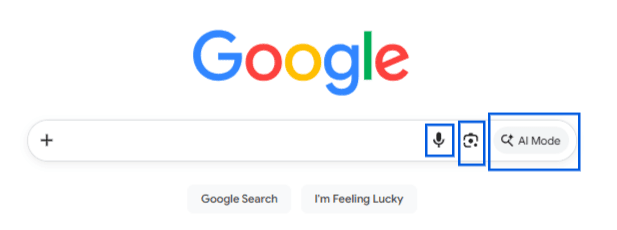
But the most important thing to remember is that this doesn’t mean people only get AI answers. AI Mode is layered on top, not replacing the results page entirely, at least not yet.
What a Search Results Page Looks Like Now
If you haven’t looked carefully at a SERP lately, here’s the shape of it:
- AI Overview at the top: Before any organic listing. It’s a few paragraphs of an AI-generated summary, broken into chunks, each with one to three source citations attached.
- A row of small site icons: Next to the summary — tap one, and it opens the full list of sources the AI drew from.
- “Highly Cited” badges: They appear next to regular organic listings, not just in AI answers, flagging pages that other articles treat as the primary source on a topic.
- “Preferred Sources” labels: Letting people mark sites they want to see more often, which is a signal now feeding into AI Overviews and AI Mode.
- Below all of that: The organic results you already know, just pushed further down the page.
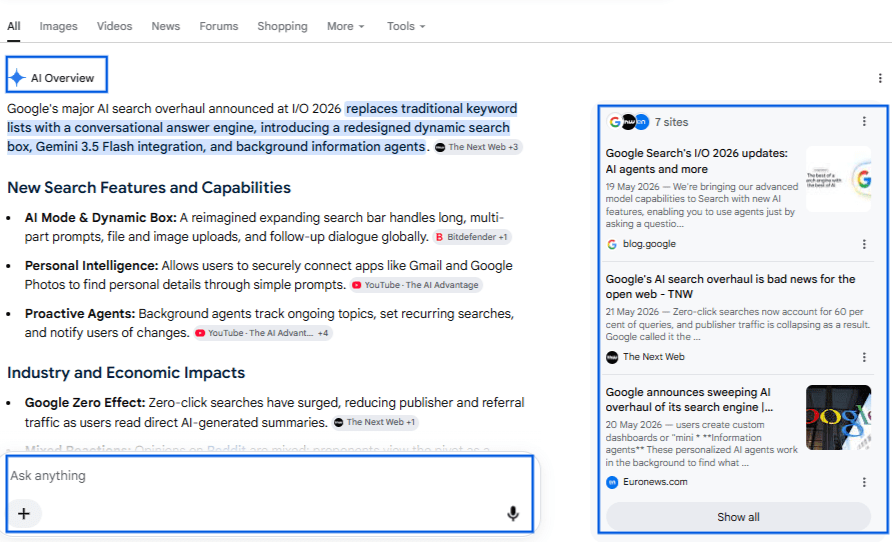
For a growing share of queries, especially straightforward informational ones, this is what people see before they ever reach a blue link.
Here’s How Traffic Is Shifting
AI Overviews now appear in roughly 48% of Google queries, up sharply from about a third just a few months earlier. And when an AI Overview appears, click-through rates on the old #1 spot have dropped meaningfully, in some measurements from around 27% to 11%.
Zero-click searches, where someone gets their answer and never clicks anything, now make up well over half of all U.S. Google searches. In AI Mode’s fuller conversational experience, the vast majority of sessions end without a click.
If a large share of your traffic comes from simple “what is” or “how does X work” queries, some of that traffic isn’t coming back in the same form.
Where You Still Have Leverage As Site Owners
But the good news is that, as site owners, you still have many areas you can control to increase your chances not only of appearing in search results, but of dominating them.
Unlike what most people believe now, traditional search results didn’t disappear. For commercial searches, local searches, and anything with a “which one should I buy / who should I hire” intent, regular organic listings are still doing most of the work. AI Mode leans hardest on informational queries, rather than on those closest to a purchase or a decision.
Other than that, being cited is a new kind of visibility. When your page is the source of an AI Overview answer, you appear as a citation. That traffic is smaller in volume than a top organic click used to bring, but it tends to be more engaged, and people who click through want the fuller picture, not just the summary.
And preferred sources reward actual audience trust, not tricks. Sites that people already choose to see more of get a real visibility boost inside AI answers now, too. That’s a loyalty signal, and it’s one you build the same way you always have: by being worth returning to.
How AIOSEO Helps You Adapt to Google’s AI Search Overhaul
One of the biggest takeaways from Google’s AI Search Overhaul is that good SEO is becoming even more important.
Google’s AI doesn’t magically understand every webpage. It still relies on signals to determine what a page is about, who created it, how trustworthy it is, and whether it contains the best answer to a user’s query. The better Google understands your content, the better your chances of appearing in both traditional search results and AI-generated experiences.
That’s where AIOSEO can help.
Add Structured Data Without Writing Code
Structured data gives search engines additional context about your content. Instead of asking Google to infer whether a page is an article, FAQ, recipe, product page, or local business listing, schema markup explicitly tells it.
This extra layer of information helps Google’s AI systems understand the purpose of your content and the relationships between different pieces of information on the page.
With AIOSEO’s Schema Generator, you can implement dozens of schema types with just a few clicks, including:
- Article
- FAQ
- How-To
- Product
- Local Business
- Review
- Course
- Service
There’s no need to write JSON-LD or edit your site’s code. Simply choose the schema that best matches your content, complete the required fields, and AIOSEO generates the markup automatically.
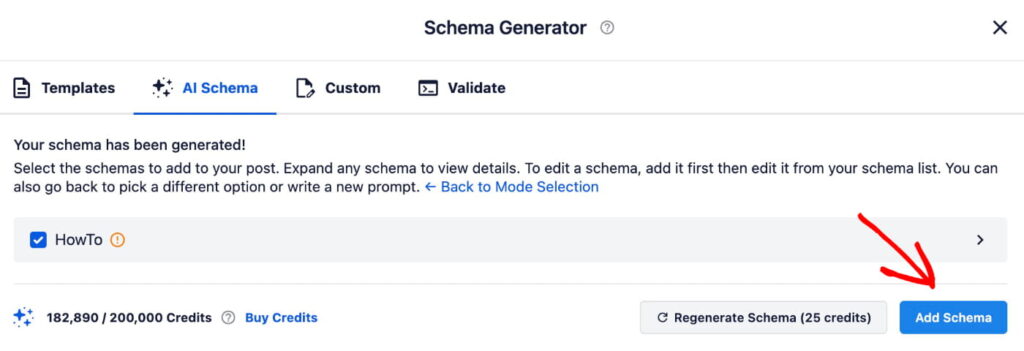
While schema doesn’t guarantee your content will appear in AI Mode or AI Overviews, it gives Google clearer signals about your page, making it easier for AI systems to interpret and surface your content when it’s relevant.
Improve Content Quality With TruSEO Analysis
Google’s AI favors content that’s well-organized, easy to read, and answers questions clearly. This is where AIOSEO’s TruSEO Analysis helps you optimize exactly those elements before you hit publish. As you write, TruSEO evaluates important on-page SEO factors such as:
- Heading structure
- Keyword placement
- Readability
- Internal linking
- Meta titles and descriptions
- Image optimization
Rather than acting as a simple checklist, it highlights opportunities to make your content clearer and more comprehensive.
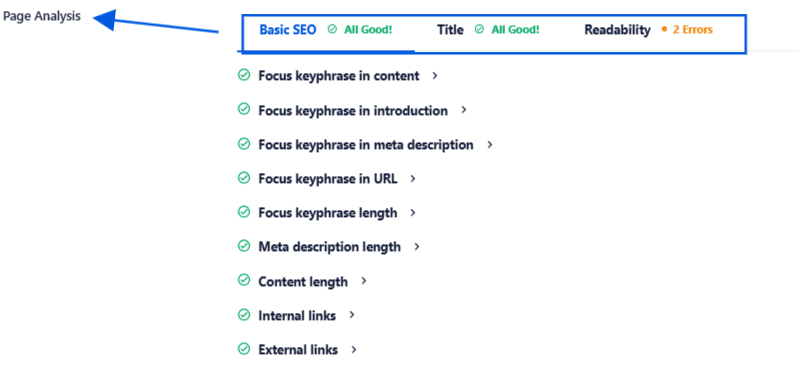
Many of these same improvements also make it easier for Google’s AI to identify the key takeaways from your page and understand how different sections fit together.
Build Trust With Author SEO
One thing Google’s AI continues to value is content that comes from credible, identifiable authors.
With AIOSEO’s Author SEO feature, you can create detailed author profiles that include credentials, areas of expertise, employer information, education, awards, and links to verified social profiles. The plugin automatically generates Author schema, helping search engines connect your content to a real person with demonstrable expertise.
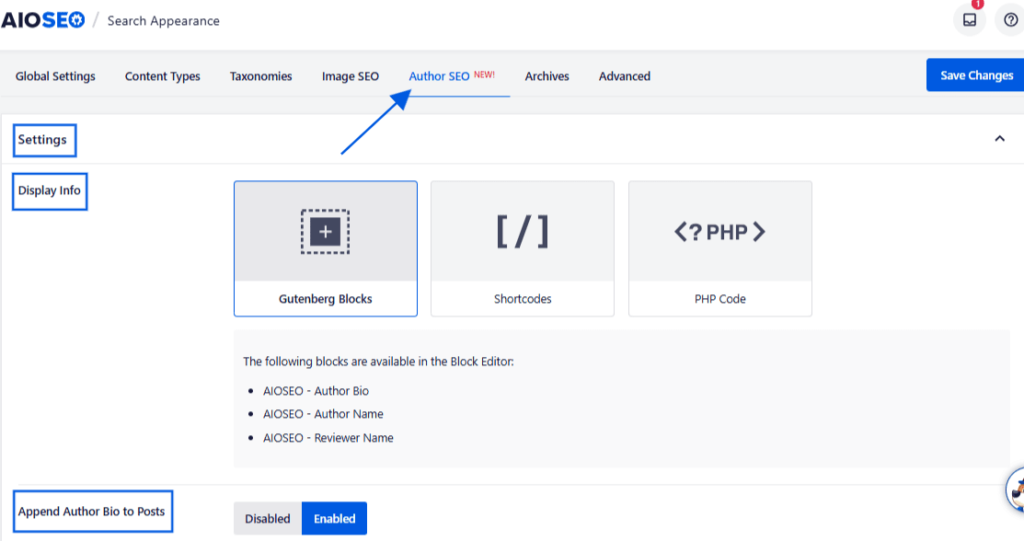
As Google places greater emphasis on E-E-A-T (Experience, Expertise, Authoritativeness, and Trustworthiness), these author signals become increasingly important for both traditional rankings and AI-powered search experiences.
Perhaps the most reassuring part of Google’s AI Search Overhaul is that the fundamentals haven’t changed. And so, publishing helpful content, answering user questions clearly, maintaining a logical content structure, and demonstrating expertise remain among the strongest ways to improve your visibility.
Google’s AI Search Overhaul: FAQs
What to never ask Google Assistant?
You should avoid asking Google Assistant for sensitive personal information, passwords, financial details, or medical and legal advice that requires a qualified professional. While AI assistants are becoming more capable, they can still make mistakes or provide incomplete information, so it’s important to verify critical decisions with trusted sources.
What is the 30% rule in AI?
The “30% rule” isn’t an official Google or AI guideline. The phrase is sometimes used informally to suggest that AI should handle repetitive drafting or research tasks while humans remain responsible for reviewing, editing, fact-checking, and adding expertise. There is no universally accepted “30% rule” for artificial intelligence.
What happened to the AI in Google Search?
Google has expanded AI-powered search experiences through AI Mode and AI Overviews. Instead of only showing traditional search results, Google can now generate AI summaries, answer follow-up questions conversationally, and help users explore topics without performing multiple searches. Traditional search results still exist, but they’re now integrated with AI-generated experiences.
Can I turn off AI in my Google searches?
It depends on the experience you’re using. In some regions, you can switch between AI Mode and traditional Search, while AI Overviews may still appear for certain queries. Google doesn’t currently provide a universal setting to permanently disable all AI-powered search features, although availability varies by country and account settings.
Next Steps
- Check Search Console’s new AI reporting: Google added dedicated AI Overview and AI Mode segments to the Search Type filter in early June, and for the first time, you can see impressions specifically from AI surfaces instead of guessing.
- Audit your highest-traffic informational pages: Check for thin or outdated content. These are the pages most exposed to AI Overview click loss, and the ones worth strengthening first.
- Don’t panic-rewrite for “AI chunks.”: Keep building clear, complete pages with solid structure and accurate schema. That’s still the playbook, and it’s now being read by more than one kind of visitor.
Google’s AI Search Overhaul shows that search will continue evolving, but one thing hasn’t changed: helpful, trustworthy content remains the foundation of long-term organic visibility. Websites that adapt to how people search, while continuing to prioritize quality, will be in the strongest position as AI becomes a larger part of the search experience.
Disclosure: Our content is reader-supported. This means if you click on some of our links, then we may earn a commission. We only recommend products that we believe will add value to our readers.
Want to Try AIOSEO for Free?
Enter the URL of your WordPress website to install AIOSEO Lite.