
When it comes to growing a digital agency, few things are as powerful and cost-effective as SEO. That’s why I believe SEO for marketing agencies isn’t just another service add-on, but the very foundation for scaling both content and revenue.
I’ve seen agencies struggle with scaling ad campaigns, balancing content calendars, and proving their return on investment (ROI).
SEO changes the game.
Done right, it builds long-term authority, generates recurring traffic, and positions your agency as the go-to partner for sustainable growth.
In this blog, I’ll break down what SEO for marketing agencies really means, why it matters so much, and the exact steps you can take to scale your services without burning out your team.
- What Is SEO for Marketing Agencies?
- Why SEO Matters for Marketing Agencies
- 7 Steps to Scale Content and SEO for Marketing Agencies
- Step 1: Build an SEO Service Framework for Your Agency
- Step 2: Scale Content Production Without Losing Quality
- Step 3: Leverage Keyword Research Strategies That Scale
- Step 4: Automate On-Page Optimization Across Clients
- Step 5: Use AI for SEO Content Creation
- Step 6: Client Reporting That Drives Retention
- Step 7: Price Models to Scale Revenue
- Final Thoughts
- FAQs About SEO for Marketing Agencies
What Is SEO for Marketing Agencies?
SEO for marketing agencies is the process of helping clients (and your own agency) rank higher in search results through strategic content, technical improvements, and authority-building practices.
It’s about creating scalable systems that deliver results for multiple clients at once.
SEO for marketing agencies means:
- Conducting keyword research that aligns with client goals
- Optimizing websites with on-page and technical SEO best practices
- Developing content workflows that balance quality and volume
- Measuring success with clear reporting tools
Unlike freelancers or in-house marketers, agencies have the unique challenge and opportunity of applying these strategies across dozens of clients. That’s why tools like All in One SEO (AIOSEO) are such a big help, as they allow you to manage on-page optimization, schema, and reporting in one place, without juggling multiple systems.
AIOSEO is an all-in-one WordPress SEO plugin designed to help you optimize content, fix technical issues, and improve rankings without needing a developer.
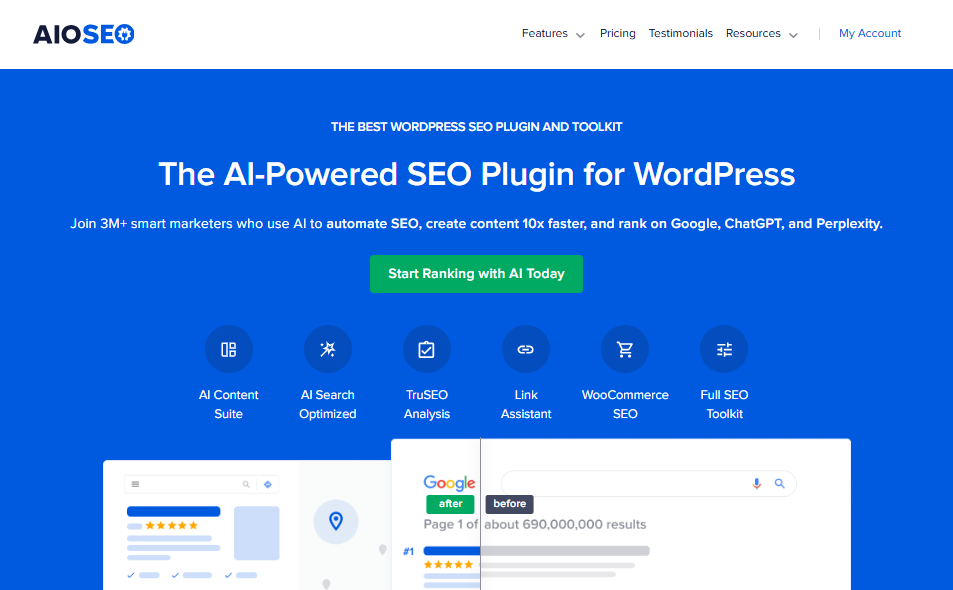
For marketing agencies, it’s especially powerful because it streamlines SEO workflows across multiple client sites, from audits and schema to link management and on-page optimization, saving hours of manual work while ensuring consistent, high-quality results.
Why SEO Matters for Marketing Agencies
When I first started learning about SEO, I only thought of it as a nice add-on. But over time, I realized it’s one of the most profitable and scalable growth strategies for marketing agencies.
That’s because, unlike one-off campaigns, SEO is ongoing. Every optimized blog, landing page, or product page increases visibility. That organic traffic keeps paying dividends months and years later.
Clients pay for monthly optimization, reporting, and updates. This creates predictable, recurring income that stabilizes cash flow.
And over time, when clients see steady improvements in their organic rankings and traffic, they’re far less likely to churn. SEO results compound over time, which means clients stick with you for the long haul.
And here’s where AIOSEO makes a difference: its built-in tools (such as the TruSEO Score, content analysis, and reporting dashboard) help marketing agencies demonstrate progress to clients faster.
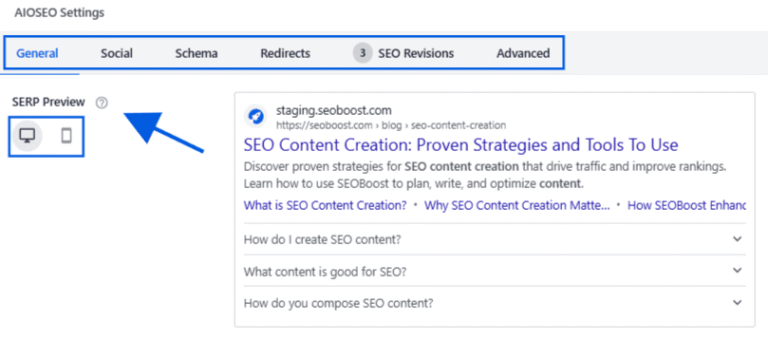
Honestly, I love using this feature, as it really helps me refine my draft before I hit ‘publish’. But more on this in the next section.
7 Steps to Scale Content and SEO for Marketing Agencies
If you’re thinking about SEO for marketing agencies and how that might help you (and your clients), I’ve got a 7-step plan for you.
Let’s break it down.
Step 1: Build an SEO Service Framework for Your Agency
Why This Matters to Agencies: A well-defined framework keeps services consistent, prevents scope creep, and lets your team scale delivery without reinventing the wheel for every client.
One of the biggest challenges marketing agencies face when offering SEO services is scope—every client wants “a little SEO,” but nobody defines what that means.
That’s why the first step in scaling is building a clear SEO service framework.
Here’s how I’d advise you to structure it:
- Define service packages: Separate services into buckets like Local SEO, Technical SEO, and Content SEO. For example, a restaurant client might only need “Local SEO”, while a SaaS client needs “Technical” and Content SEO.
- Set measurable key performance indicators (KPIs): Whether it’s “increase organic traffic by 30% in 6 months” or “rank in the top 3 for 10 keywords,” KPIs should align with each client’s expectations.
- Include SEO in onboarding: Every client onboarding call includes a walkthrough of what SEO looks like for them—deliverables, timelines, and reporting.
And if you want to scale this process even more, AIOSEO can save the day.
During onboarding, you can use the Smart Setup Wizard to configure a client’s WordPress site in minutes. It auto-detects site type, sets up metadata defaults, and builds XML sitemaps instantly. For new clients, this saves hours of manual setup.
For service frameworks, you can also rely on User Role Manager. Using this, writers gain access to specific tools, such as TruSEO, while strategists control advanced settings. This prevents missteps while keeping the workflow smooth.
Step 2: Scale Content Production Without Losing Quality
Why This Matters to Agencies: Scaling content isn’t just about volume, but also about building repeatable systems. With AIOSEO, you can publish more content across multiple clients while keeping optimization airtight and consistent.
Content is at the heart of SEO, but when you’re working with multiple clients, the hardest thing is maintaining quality at scale. It’s easy to churn out blogs, but it’s much harder to ensure they’re optimized, on-brand, and published on time.
I usually start by building workflows that move from keyword research → briefs → drafts → optimization → publishing.
Remember, tools and templates keep everything repeatable. My advice is to invest in a good stack, as it can make a big difference to your workflow.
I’d also suggest grouping keywords into topic clusters (e.g., “email marketing tools,” “email marketing tips,” “email marketing automation”). This lets me create pillar + cluster content at scale.
Depending on your workflow, you can create editorial calendars for your clients and map out topics in advance to keep production consistent and aligned with SEO goals.
Here are some of the AIOSEO features you can use to make this happen:
- TruSEO Score + Content Analysis: My writers use this real-time optimization system to polish their drafts before I even see them. It flags missing meta descriptions, weak headings, and keyword gaps—so editors spend less time fixing them.
- Schema Generator: If a client’s blog includes FAQs or reviews, AIOSEO automatically applies the correct structured data, boosting click-through rate (CTR) without extra dev time.
- Bulk Editing: For significant content pushes (e.g., updating 200+ meta titles for a client), you can also use AIOSEO's bulk editing feature to maintain consistency.
Step 3: Leverage Keyword Research Strategies That Scale
Why This Matters to Agencies: Scaling keyword research means you’re producing content that ranks and converts across multiple clients, without reinventing the process each time.
Keyword research is the foundation of every SEO campaign, but when you’re managing multiple clients, it can become one of the biggest bottlenecks. Doing keyword research one client at a time is inefficient, and if your process isn’t standardized, you’ll end up with uneven results across projects.
Remember, every client is different. For a B2B SaaS company, your focus should be on long-tail, high-intent queries like “best project management software for small teams.” For an eCommerce client, prioritize product-driven keywords.
Instead of guessing, always analyze what competitors are ranking for. This helps you find gaps where your clients can realistically win.
I rely a lot on SEOBoost’s Topic Reports to help me quickly identify high-value keyword clusters and content opportunities based on competitors. I no longer spend hours manually searching search engine results pages (SERPs).
This ensures every piece of content is optimized for the right target keyword, with related terms highlighted in the content analysis.
Step 4: Automate On-Page Optimization Across Clients
Why This Matters to Agencies: Automating on-page SEO ensures consistency, scalability, and speed. It reduces human error, frees up team time, and allows agencies to take on more clients without overwhelming their resources.
When you’re managing SEO for one site, it’s easy to manually tweak meta tags, add schema, and optimize images. But when you’re handling dozens of clients, manual on-page optimization is a nightmare. That’s where automation is key, and AIOSEO makes it possible.
You can set global templates for meta titles and descriptions, so new blog posts automatically follow best practices. For example, product pages can dynamically pull in the product name, brand, and keyword without my team having to write every tag.
If you need to update hundreds of meta descriptions across client blogs, you can do it all inside AIOSEO’s bulk editor. No more page-by-page edits.
You can also automate the schema for common content types (like Articles, FAQs, LocalBusiness, Products). This not only saves developers hours but also ensures that every client benefits from rich results.
Local SEO optimization: For location-based businesses, AIOSEO’s Local SEO module lets you set NAP details, opening hours, and Google Maps integration once, and it applies consistently across the site.
Step 5: Use AI for SEO Content Creation
Why This Matters to Agencies: AI reduces content bottlenecks, and with AIOSEO’s AI Writing Assistant, agencies can produce more client-ready, SEO-aligned content faster, without sacrificing quality.
One of the biggest challenges for agencies is creating enough content to keep clients happy, without overloading your writing team. That’s where AI comes in.
But I’ve learned that using AI carelessly can sometimes backfire, leading to generic or keyword-stuffed copy.
Remember, the key is combining AI with solid SEO workflows.
Here’s how you can approach it:
- Idea generation: AI helps brainstorm blog titles, FAQs, and subtopics, especially when clients need high-volume content.
- Content outlines and briefs: Instead of starting from scratch, you can use AI to generate structured outlines and briefs. This speeds up production and ensures alignment with search intent.
- Drafting support: For repetitive or formulaic content (like meta descriptions, product blurbs, or FAQs), AI accelerates output while freeing writers to focus on higher-level tasks.
This is why, I absolutely love AIOSEO’s AI Writing Assistant. This feature is baked right into the WordPress editor.
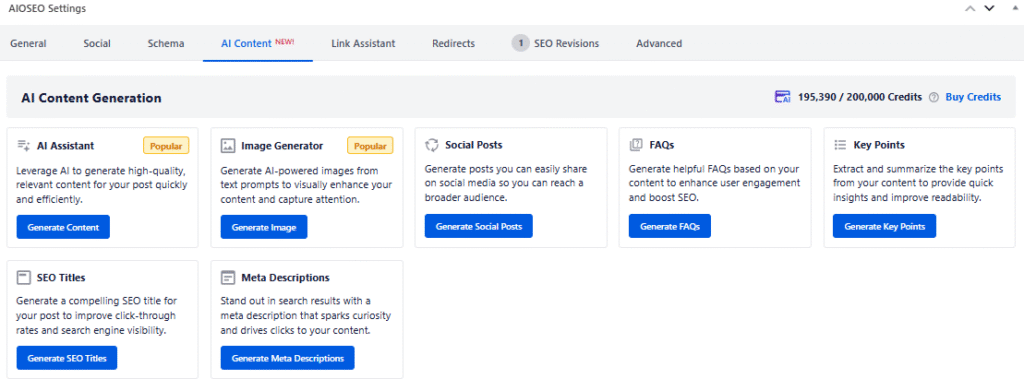
What I like most about it is that it generates SEO-optimized text. For example, if a writer is working on a blog about “local SEO for dentists,” the AI assistant suggests headings, schema-friendly FAQs, and keyphrases aligned with best practices.
Combined with TruSEO Score and Content Analysis, it ensures the content is structured to rank. For agencies, this is a lifesaver because you can scale content production without scaling headcount at the same rate.
Step 6: Client Reporting That Drives Retention
Why This Matters to Agencies: Clear reporting builds trust, transparency, and retention. It proves your value month after month, which translates into stable revenue and stronger client relationships.
Here’s the truth: you could deliver excellent SEO results, but if your client doesn’t understand or see them, retention suffers. That’s why reporting is a core part of scaling an SEO agency.
Your reporting workflow should ideally include:
- Monthly/quarterly reports with traffic, rankings, and conversion data
- Visual dashboards that let clients see progress at a glance
- Next-step recommendations so reports aren’t just “what happened” but also “what’s next.”
If you use AIOSEO, you can view keyword rankings, impressions, clicks, and content performance—right inside WordPress. This cuts down the time I spend switching between Google Search Console and spreadsheets.
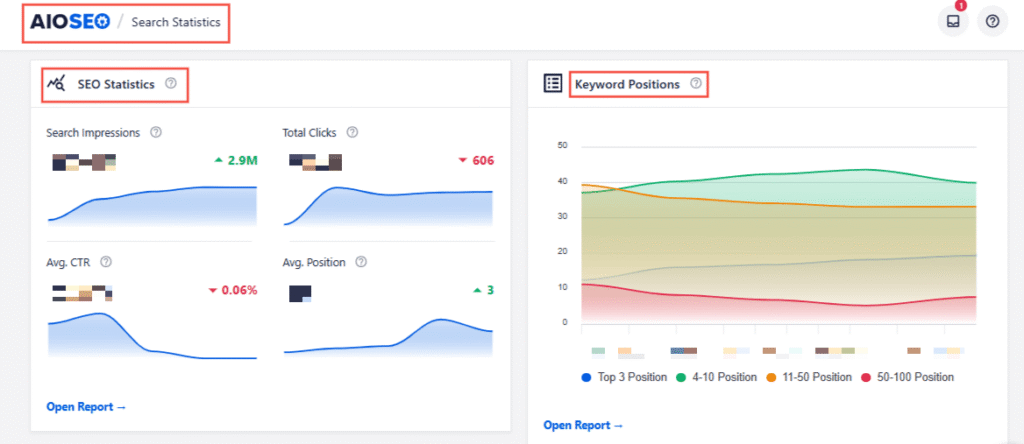
In fact, AIOSEO integrates directly with Google Search Console, which means all the core KPIs are pulled into one place. With just a few clicks, you generate reports that are client-friendly and easy to export.
Trust me, your clients would love to open their site backend and see progress right there.
Step 7: Price Models to Scale Revenue
Why This Matters to Agencies: Without smart pricing models, scaling means more work for the same pay. AIOSEO supports scalable pricing by making results measurable and provable, so you can confidently charge what your work is worth.
More than just delivering work, scaling an agency is about structuring your pricing so that growth is profitable and sustainable. Early on, many marketing agencies make the mistake of underpricing SEO for marketing agencies and other services, resulting in high workloads and low margins.
So, here are three models that work particularly well for SEO:
1. Retainer-Based SEO Packages
Clients pay a fixed monthly fee for ongoing SEO services like keyword research, content optimization, reporting, and technical audits. This creates predictable revenue and makes resource planning easier.
2. Value-Based Pricing for Content Creation
Instead of charging per word or per blog, you can set the price based on the content's impact. For example, a blog designed to capture high-intent leads or rank for a competitive keyword is priced higher because of its value to the client.
With AIOSEO’s TruSEO Score and Reporting, you can demonstrate why certain pieces deserve premium pricing by showing their impact on rankings and conversions.
3. Upselling Related Services
SEO for marketing agencies often opens the door to additional services such as conversion rate optimization (CRO), paid advertising, and advanced analytics.
Final Thoughts
Scaling an agency is about building repeatable systems that deliver results efficiently. And SEO for marketing agencies provides the perfect opportunity to do that. It creates stable revenue, strengthens client retention, and positions your agency as a long-term growth partner.
For many agencies, the turning point has been adopting tools that support scale. And for a lot more of them, AIOSEO has been central to that process.
So, if you’re looking for ways to grow your marketing agency in 2026, start by refining your SEO processes.
Build a clear framework, leverage automation, and focus on measurable results. With the right strategies and tools in place, you’ll scale your revenue.
FAQs About SEO for Marketing Agencies
Do marketing agencies do SEO?
Yes, SEO for marketing agencies is one of the most common services they offer. It helps agencies deliver long-term, measurable growth for clients while creating recurring revenue for themselves. Agencies that don’t include SEO often miss out on opportunities to differentiate themselves and build lasting client relationships.
How is SEO used in marketing?
SEO is used in marketing to improve a brand’s visibility, attract organic traffic, and increase conversions. For agencies, SEO services complement other marketing activities (like social media or paid ads) by providing a steady flow of leads and authority-building content. It’s a cost-effective, compounding channel that strengthens any marketing strategy.
What are the 4 types of SEO?
The four main types of SEO are:
- On-Page SEO: Optimizing content, keywords, and structure on individual pages.
- Off-Page SEO: Building backlinks, citations, and brand authority.
- Technical SEO: Improving crawlability, site speed, and indexing.
- Local SEO: Optimizing for location-based searches and Google Maps rankings.
Want to Try AIOSEO for Free?
Enter the URL of your WordPress website to install AIOSEO Lite.
Disclosure: Our content is reader-supported. This means if you click on some of our links, then we may earn a commission. We only recommend products that we believe will add value to our readers.