
Want to know why some sites rank on page 1 within days while others wait months for movement? More often than not, it comes down to website authority.
When I first started working in SEO, I focused heavily on keywords and content creation. But over time, I realized something critical: no matter how well-optimized your content is, if your website authority is weak, ranking becomes an uphill battle. More than your content, Google and other search engines care about how trustworthy and authoritative you are compared to competitors.
So, in this guide, I’ll break down exactly what website authority is, why it matters, the metrics that define it, and how you can analyze and leverage it to build better content.
Let’s start with a definition.
In This Article
What Is Website Authority?
Website authority refers to how trustworthy and credible your site appears to search engines. Think of it as your site’s reputation.
A high-authority site like HubSpot has earned that status through years of publishing valuable content, acquiring backlinks from reputable sites, and maintaining technical SEO health.
Unlike official Google metrics (such as PageRank, which is no longer public), website authority today is measured by third-party metrics, such as Domain Authority (DA) from Moz or Domain Rating (DR) from Ahrefs.
And while these metrics don’t directly control rankings, they do strongly correlate with them. The higher your authority, the easier it becomes to rank for competitive keywords.
Why Website Authority Matters for Content
Let's say 2 sites publish nearly identical guides. One comes from a brand-new blog. The other comes from a high-authority site. Which one ranks faster?
The higher-authority site almost always wins, because Google trusts its track record. Here's why authority is so influential for content:
- Rankings: Authoritative websites can break into competitive SERPs (search engine results pages) faster.
- Click-through rates: Users are more likely to trust and click results from reputable domains.
- Link attraction: Strong authority sites naturally earn backlinks, further reinforcing their credibility.
In short, authority acts like an SEO multiplier. With it, your content can outperform competitors. Without it, even the best-written post may struggle to reach page 1.
5 Metrics That Define Website Authority
Here are the 5 most important metrics to track when evaluating website authority.
1. Domain Authority (DA)
Moz's Domain Authority is a score from 0 to 100 that predicts how well a website is likely to rank in search results. It factors in root domain linking, total links, and other signals. While not a Google metric, DA is widely used for benchmarking your site against others.
2. Page Authority (PA)
While DA looks at your overall domain, Page Authority measures the ranking strength of individual pages. This is key because sometimes a specific page carries far more weight than the site as a whole.
3. Trust Flow and Citation Flow
From Majestic, Trust Flow measures the quality of backlinks while Citation Flow measures the quantity. Ideally, you want both: high numbers of backlinks and those from reputable, trusted sources.
4. Backlink Profile
One of the most direct signals of authority is the quality and diversity of your backlink profile. Backlinks from high-authority domains act like endorsements. The more reputable your endorsers, the more trusted your site becomes.
5. Organic Search Traffic
Authority isn't just about backlinks and scores. It's about real-world results. Sites with higher authority generally attract more consistent, organic traffic. Tools like AIOSEO and Semrush track this and use it as a proxy for authority.
3 Tools to Use for Website Authority Analysis
Here are the top 3 tools you can use to check your website's authority.
1. Moz's Domain Analysis
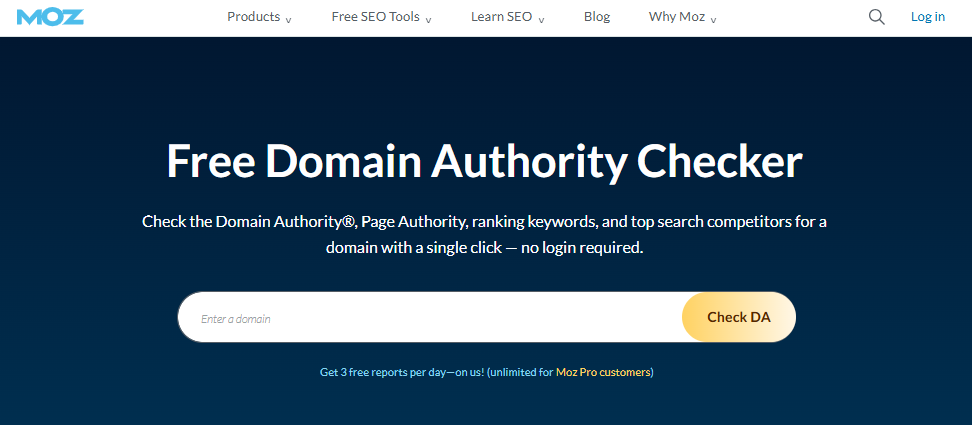
Moz is best known for introducing Domain Authority (DA) and Page Authority (PA), which are widely used benchmarks for authority scoring and can be used as website authority checker. Their free DA checker lets you quickly gauge a site's overall authority.
When vetting potential backlink opportunities, running domains through Moz is a reliable first step. A DA 60 site carries far more weight than a DA 20. You can also use it to benchmark client sites against competitors.
Pricing: Free DA Checker for quick lookups. Moz Pro starts at $99/month, which includes full keyword research, link tracking, and site audits.
2. Ahrefs

Ahrefs is arguably the most comprehensive SEO toolkit for authority analysis. Its Domain Rating (DR) is a key metric, but the backlink analysis and organic traffic estimates are where it really earns its place in a professional workflow.
You can monitor competitors' DR and backlink profiles to see what's driving their authority, and analyze which backlinks pass the most authority to client sites, or whether any toxic links are dragging credibility down. Ahrefs' Content Explorer also shows which pages are earning the most links in an industry, which helps shape content strategy.
Pricing: Starts at $99/month for the Lite plan.
3. Semrush

Semrush uses an Authority Score based on 3 components: backlink quality, organic search traffic, and spam indicators. Together, they provide a reliable picture of a domain's overall strength.
When evaluating a site for link building or competitive research, Semrush's Authority Score gives a quick, accurate read on whether a domain is genuinely strong or just inflated by low-quality links. The Backlink Audit tool also helps identify toxic or spammy links, which is essential when prioritizing outreach targets for client sites.
Pricing: Plans start at $129.95/month, with authority metrics available on all paid tiers.
How Website Authority Affects Content Creation
Here’s a simple truth: search engines reward authority because it signals trust and reliability.
But authority doesn’t just determine if you rank. It influences how fast you rank and how much visibility you sustain. I’ve seen authoritative sites rank within days for new content, while smaller sites wait months for movement.
For example, if All In One SEO and a brand-new blog website both publish guides on “email marketing,” AIOSEO’s article is more likely to outrank the new blog, because it has earned years of backlinks, traffic, and engagement. Or, in simple terms, it has earned the search engine's trust.
Let’s contextualize this: If your website already has medium-to-high authority (DA 50+), you can realistically target competitive head terms like “SEO tools.” But if you’re starting from a DA 10-20 site, I’d recommend prioritizing long-tail keywords like “best free SEO tools for beginners,” where competition is lower.
Depending on your authority, you can rank on page one in under a week. However, if you’re just starting, it may take longer, even months.
Authority doesn’t just determine if you rank. It influences how fast you rank and how much visibility you sustain. I’ve seen authoritative sites rank within days for new content, while smaller sites wait months for movement.
High-Authority Websites
If you run a high-authority site, your advantage is the ability to go after competitive keywords and broad topics. But the challenge becomes maintaining freshness and depth. Even top-ranking pages decay if left untouched.
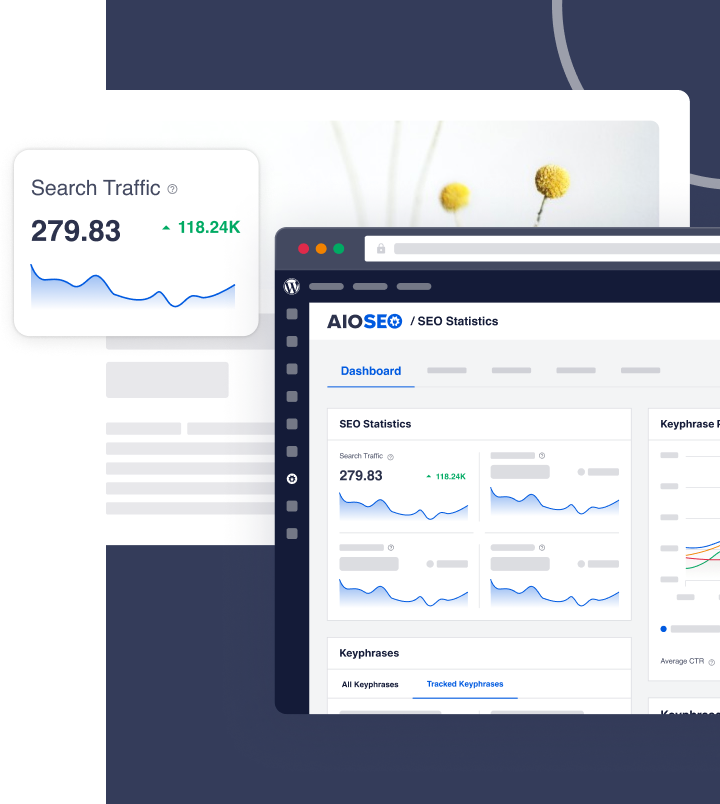
This is why auditing existing content every 6 to 12 months matters. With AIOSEO's Search Statistics dashboard, you can monitor which posts are losing impressions or clicks directly inside WordPress, without bouncing between Google Search Console and your CMS.
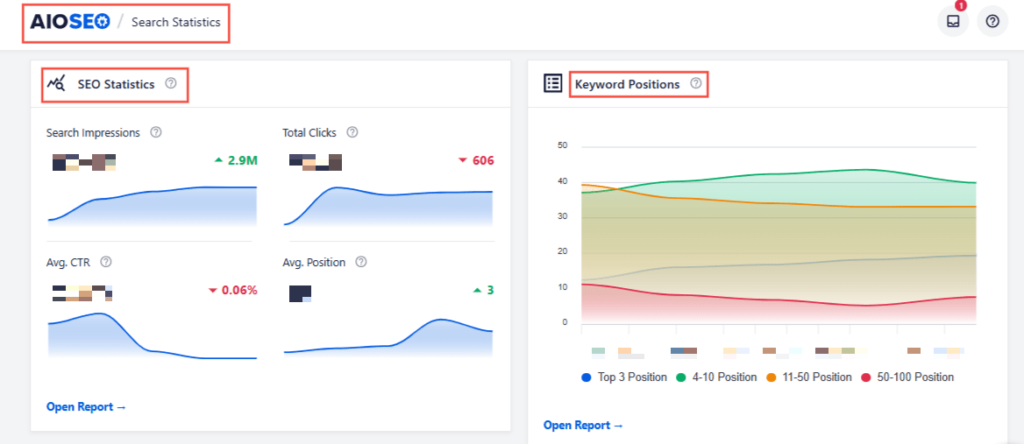
When you spot a page slipping, you can refresh it with updated data, new internal links, and revised examples before rankings collapse.
I'll discuss this in more detail in the next section.
Low-Authority Websites
For low-authority sites, the strategy is different. You're in building mode, and every piece of content should be designed to earn trust signals.
So, here are a few best practices I'd recommend if your website is relatively new or has low authority:
- Target long-tail queries with lower competition.
- Create topic clusters: start with a pillar page (e.g., “What is SEO?”) and link to supporting posts (e.g., “SEO for bloggers,” “technical SEO basics”). This internal linking strengthens authority and helps rankings.
- Leverage external authority by citing and linking to credible sources, which builds topical relevance and trust.
- Promote content actively through social media, guest posts, and email to attract backlinks and mentions.
Over time, these strategies compound to lift your domain authority, making competitive keywords more attainable.
7 Ways to Improve Your Website Authority and Improve Content Quality
Now that you understand how website authority can impact your ranking, here are some of the most effective ways you can leverage it to improve your content quality.
For WordPress site owners and agencies managing client sites, AIOSEO makes it even easier. This plugin provides a set of purpose-built features that tie directly into authority-building.
Here's how to use them together.
1. Content Promotion and Link Building
Even the best content won't build authority without visibility. Promotion is essential for attracting backlinks, which remain one of Google's top ranking signals.
Here are the 3 things you can start with immediately for content promotion:
- Outreach: Identify relevant sites in your niche to pitch for backlinks or guest posts using Ahrefs or Majestic.
- Social Amplification: Share content on LinkedIn, Twitter/X, and industry-specific communities.
- Guest Posting: Publish on higher-authority sites to earn both visibility and backlinks.
Other than promotion, backlinks remain one of the strongest signals of authority, but not all backlinks are equal, so you should prioritize quality over quantity. What that means is that a “2025 SEO Statistics” blog can generate dozens of organic backlinks if other sites cite it. That's the kind of asset worth building.
You should target backlink-worthy formats such as research reports, case studies, and infographics. You can use tools like Ahrefs or Majestic to identify high-authority domains in your niche, then pitch collaborations or guest posts.
2. Strengthen Your Internal Link Structure With Link Assistant
And while you're scouting backlinks, it's also a good idea to strengthen your site's internal linking.
I'd advise using AIOSEO's Link Assistant feature to find internal linking opportunities across your site. It helps you identify the right posts and automates the process so you don't have to spend a lot of time doing manual work.
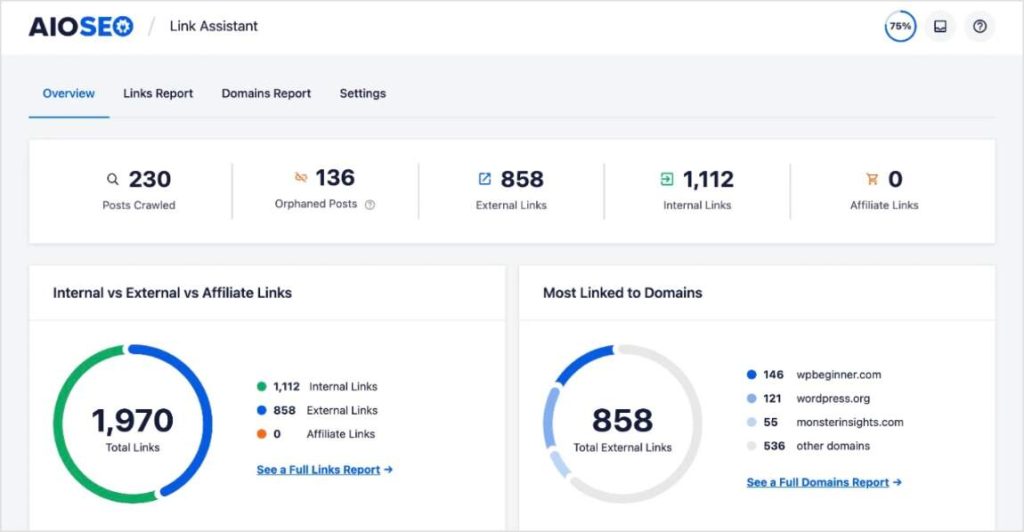
Navigate to All in One SEO » Link Assistant. AIOSEO will scan your entire site and generate a report showing:
- Orphaned pages with no internal links pointing to them
- Suggested internal links based on keyword relevance between existing posts
- External link opportunities alongside internal ones
For each suggestion, you can add the internal link directly from the Link Assistant interface without opening the post editor. This is especially useful for agencies managing large content libraries across client sites, where manually auditing internal links post by post isn't scalable.
A well-linked internal structure passes authority from your strongest pages to newer ones, accelerating the ranking of fresh content.
3. Create Comprehensive Content
Google favors depth because it signals expertise and relevance. Instead of a shallow 800-word blog, aim for 2,000 to 3,000 words that cover every subtopic a reader might search.
Ideally, structure the content around all relevant subtopics and secondary keywords. You should also include relevant visuals, data, and examples to support your claims.
Once you're done writing the content in WordPress, you can check how optimized it is using AIOSEO's TruSEO on-page analysis feature to check on-page optimization as you write. It surfaces gaps in keyword usage, readability, and metadata before you publish.
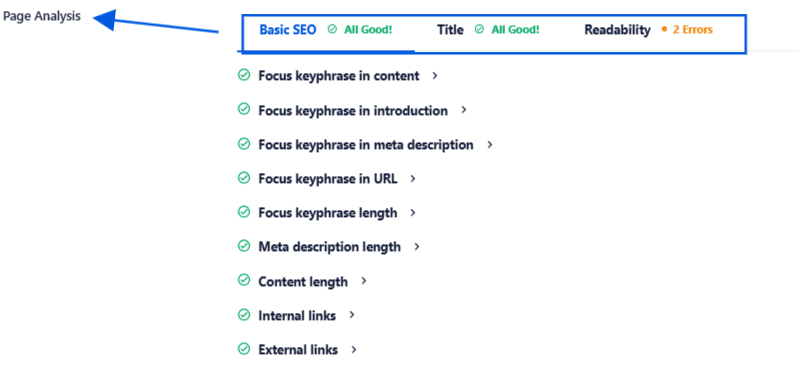
Remember, while content is the foundation of authority, it's not just about publishing frequently. It's about publishing valuable, optimized, and trustworthy content.
4. Add Author Authority With Author SEO
One of the best ways you can build credibility for website authority is by adding author authority for the writers of your website.
For Google, this structured data signals that your content was written by a real, verifiable expert, which is a direct E-E-A-T (Experience, Expertise, Authoritativeness, Trustworthiness) signal. For client sites in competitive or YMYL (Your Money or Your Life) niches like finance, health, or legal, Author SEO is one of the highest-leverage settings you can configure.
You can set this up pretty easily using AIOSEO's author SEO feature.
Navigate to All in One SEO » Search Appearance » Author SEO. This feature lets you attach structured author schema to every post, including credentials, bio links, and social profiles.
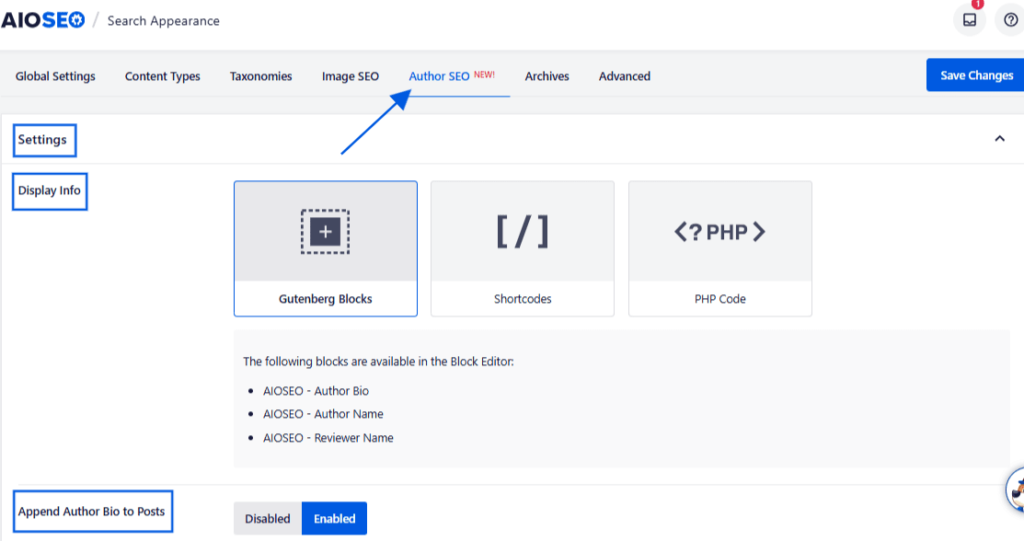
You can use this to attach verified author credentials to your content. This signals to Google that your content is written by real experts, which is an increasingly important ranking factor for competitive topics.
5. Add Schema Markup With the Schema Generator
Schema markup doesn't directly increase authority scores, but it does improve how your content appears in search results through rich snippets, which in turn improve click-through rates and signal relevance to Google.
And you don't even need technical knowledge to do that. You can use AIOSEO's Schema Generator to add structured data that helps search engines understand your content type and surface it as rich results.
Navigate to All in One SEO » Search Appearance » Schema Markup, or use the per-post Schema settings in the AIOSEO meta box below the editor.
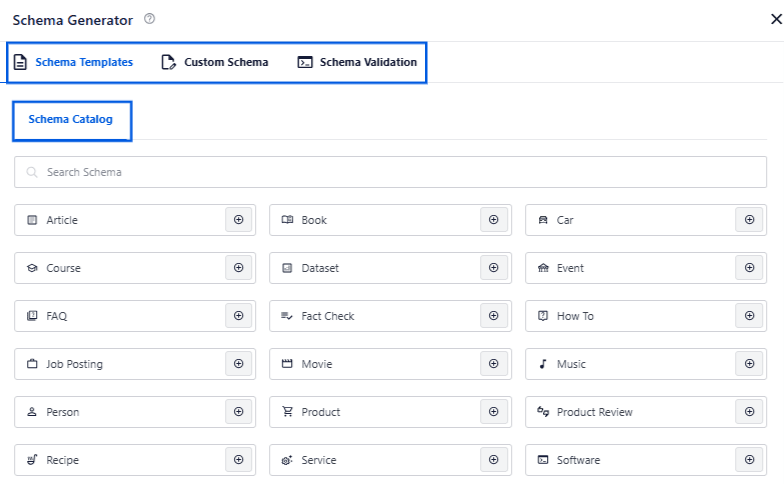
The Schema Generator lets you add structured data for Articles, FAQs, How-Tos, Reviews, Products, and more without writing a single line of JSON-LD. For agency workflows, you can set site-wide schema defaults and then override at the page level, which means you're not re-configuring schema from scratch on every post.
And you don't even need technical knowledge to do that. You can use AIOSEO's Schema Generator to add structured data that helps search engines understand your content type and surface it as rich results.
For agencies and professional builders, this is especially valuable for client sites where rich snippets can directly improve click-through rates.
6. Regular Content Updates
Even authoritative sites lose rankings due to content decay. A blog post written in 2022 may still bring traffic, but if competitors publish fresher data, your rankings will slip.
As a general rule, you should schedule content reviews every 3 to 6 months to identify opportunities for content refresh.
To do this from your WordPress dashboard, you can just use AIOSEO's Search Statistics to identify which posts are losing impressions, clicks, or average position over time. Posts with declining performance are your highest-priority candidates for refresh.
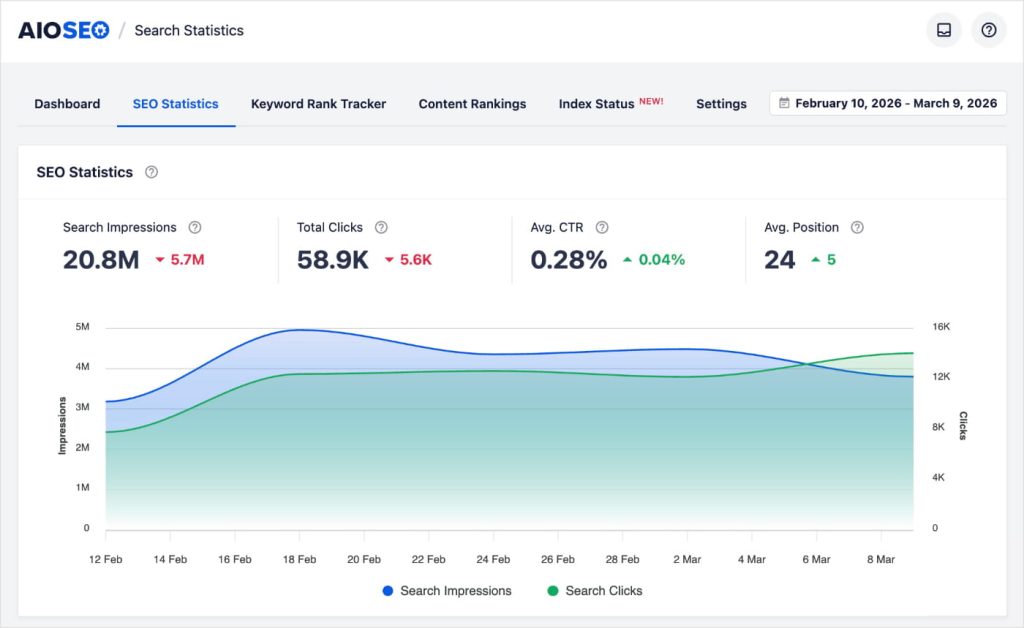
The dashboard pulls live data from Google Search Console and surfaces your top-performing pages, along with keyword-level position tracking. Sort by “Losing” to isolate pages that are slipping in rankings. These are your first refresh priorities.
To do this from your WordPress dashboard, you can just use AIOSEO's Search Statistics to identify which posts are losing impressions, clicks, or average position over time. Posts with declining performance are your highest-priority candidates for refresh.
Refresh posts with updated stats, new internal links, and revised examples. Swapping old stats for current data alone can push a decaying post back to page 1 within weeks.
7. Combine Authority Metrics With Traffic and Conversions
The easiest way to gauge authority over time is by monitoring how individual pieces of content perform in search. And while metrics like DA (Moz) and DR (Ahrefs) don't directly influence rankings, they're reliable benchmarks for measuring progress over time.
Here's what you can do to regularly assess your domain authority:
- Check your DA and DR scores monthly to benchmark against competitors.
- Track Page Authority (PA) of high-value content like landing pages or cornerstone blogs to see which pages are gaining the most trust.
- Connect authority signals with content opportunities. If your DA is rising, it might be time to pursue more competitive keywords.
But remember, authority is only valuable if it drives results. That's why combining authority metrics with organic conversions is important.
You can use GA4 to see if traffic growth from high-authority content translates into sign-ups, leads, or purchases. Overlay backlink acquisition and authority score improvements with conversion data to demonstrate ROI to stakeholders or clients.
Final Word
Website authority is a strategic signal that guides how you plan, create, and optimize content. When you understand why a site ranks the way it does, you stop guessing and start making informed decisions about what content to publish, update, or retire.
For WordPress users managing their own sites or client accounts, AIOSEO gives you the tools to act on that data directly. You can also learn more about using all the features and best strategies together in our guide on how to do an SEO audit for your WordPress site.
But remember, your goal shouldn't be to inflate authority scores; it should be to earn them. And the fastest way to do that is to consistently publish content that's relevant, up to date, well-structured, and connected.
FAQs
What is website authority?
Website authority refers to a site's overall strength, trustworthiness, and credibility in the eyes of search engines. It's influenced by factors like backlinks, content quality, domain history, and user engagement.
How do you determine the authority of a website?
You can measure authority using tools like Moz (Domain Authority), Ahrefs (Domain Rating), or Majestic (Trust Flow and Citation Flow). These metrics assess the quality and quantity of backlinks, domain strength, and other signals. For content-level authority and on-page performance, AIOSEO's Search Statistics dashboard tracks keyword positions and traffic trends directly inside WordPress.
What is a good website authority score?
There's no universal “good” score since authority is relative to your niche. A DA 30 site may dominate in a small industry, while in competitive niches like SaaS or marketing, you'll often see DA 60 or higher on page 1. The key is steady growth: if your authority score and backlinks are trending upward, you're on the right track.
Disclosure: Our content is reader-supported. This means if you click on some of our links, then we may earn a commission. We only recommend products that we believe will add value to our readers.
Want to Try AIOSEO for Free?
Enter the URL of your WordPress website to install AIOSEO Lite.



Great perspective! Website authority isn’t just a metric to track—it’s a valuable indicator of what content earns trust and visibility. Analyzing authority alongside content quality, relevance, and backlink profiles can uncover powerful opportunities to create resources that genuinely outperform competitors. Thanks for sharing these actionable insights!
https://www.redigerit.com/